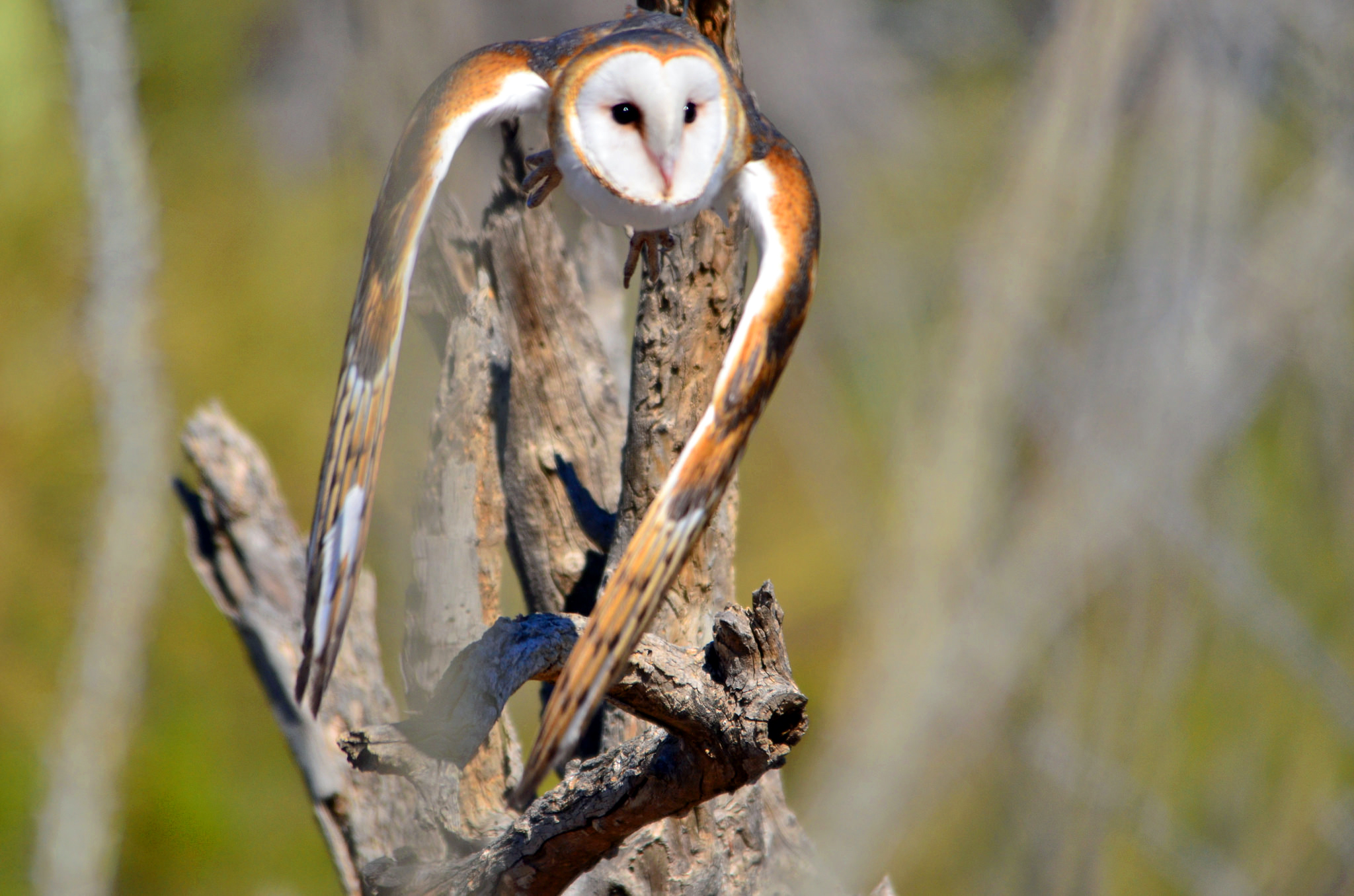
Common Barn Owl

Hummingbird

Bobcat
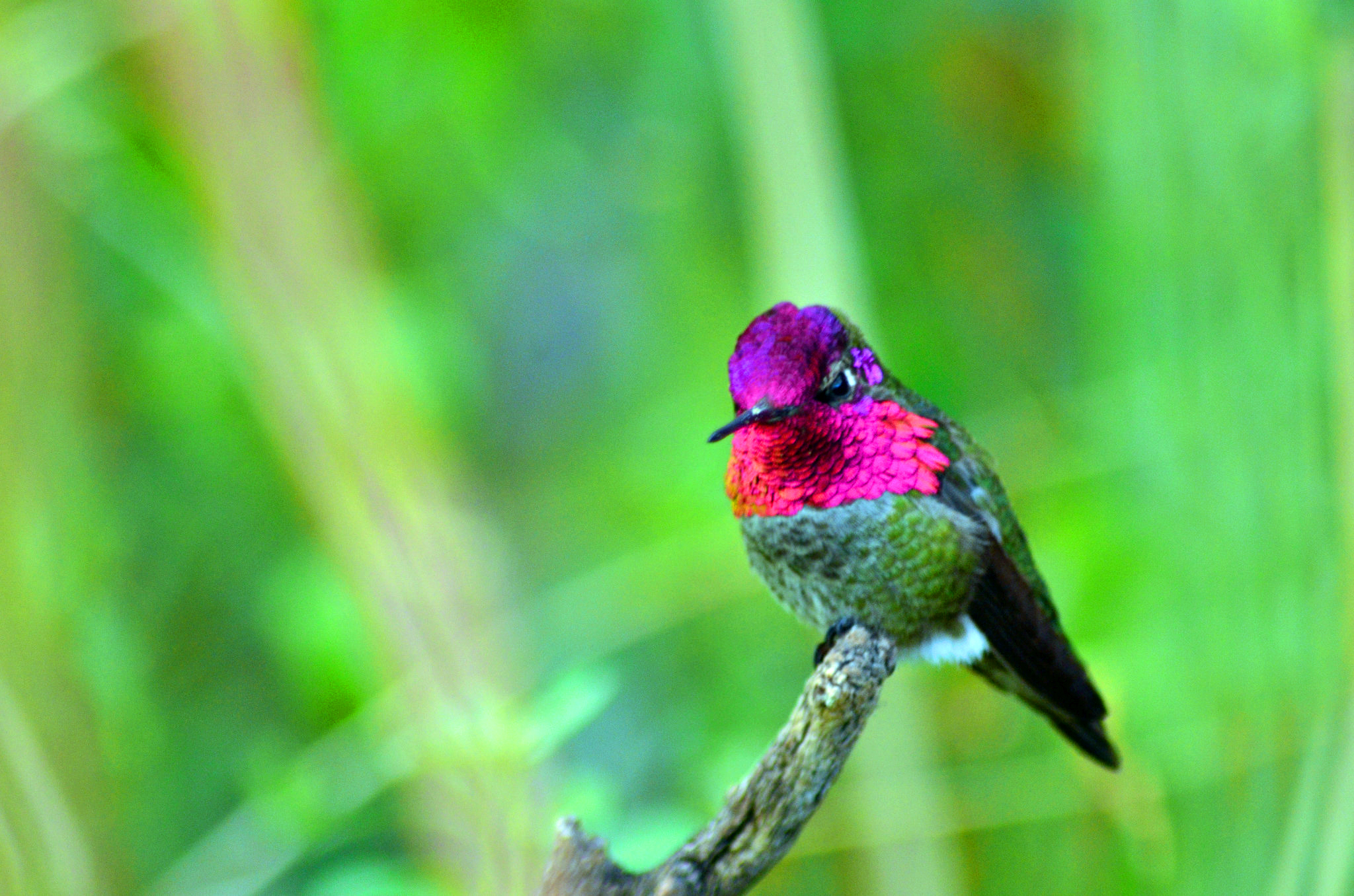
Hummingbird

Harris Hawk

Ocelot

Grey Hawk

Hummingbird
Click on the above images to enlarge.
See 2015 photos from the Sonoran Desert Museum here
And here
And here
And here
Everything in Moderation
Scoop Heuerman (my dad)
David Plummer used to see only one way to the top of the podium. The former Gophers swimmer believed he wouldn’t make it unless he stripped away everything but his sport, putting the pursuit of fast times above all else.
Earlier this month, with a 4-week-old son Ricky asleep on his chest, Plummer laughed at that thought. “I’m almost embarrassed at how long it took me to realize it,” he said. “But the better I try to do in every aspect of my life–as a dad, a husband, athlete, coach–the better everything goes.” (Minneapolis Star Tribune June 26, 2016)
UPDATE: PLUMMER WON AN OLYMPIC BRONZE MEDAL IN THE 100 METER BACKSTROKE ON AUGUST 8, 2016.
The mechanistic world view, mostly unconscious, has dominated how we think about life and how to live it for 300 years. When we think of people as machines, we run them until they quit, breakdown or checkout. Then we turn to medicine for a quick-fix. Then we max out again.
A living system world view replaced and encompassed the mechanistic world view a century ago. We need to change how we think about life. We need to understand—at work and at home—that managing a social system (a company; a family) means finding the optimal values for the system’s variables (or the goals of the organization and the activities of the family). If we try to maximize any single variable instead of optimizing all variables, the person, the family or the organization will decline, suffer dysfunction, breakdown or die.
We can’t avoid occasional excessive stress and all-out effort in one area of life. Moderate stress alerts and motivates us and sharpens our focus. But maximum stress for a long time in one area of life puts stress on all aspects of our life and harms and destroys living systems–including people.
I’ve been a maximizer more than an optimizer over my lifetime—especially in my work life. I value excellence. I love achievement and strive relentlessly to accomplish my goals. I feel alive as I climb the newest mountain in my life. I’ve gotten a lot done. My late friend, Clinical Psychologist Diane Olson, Ph.D. said I had the intensity gene. As I age, my emotional intensity grows stronger than ever as I know time runs out for all of us and I want to do and experience as much as possible in my life. But at the extreme, I am perfectionistic and obsessive/compulsive. I don’t have a turnoff button. I am impatient and critical of myself and others. I burn out. I figured such intensity harms to me more as I get older than when I was younger. I took up meditation in large part to help me lower my appetites. I work to find the elusive moderation.
My dad was right and David Plummer had a valuable insight as a young age. I hope more kids who maximize sports to achieve unreachable goals, more adults who focus only on career aspirations and more organizations who die far earlier than necessary due to their singular pursuit of profit will learn the lesson David Plummer realized and the wisdom of my dad learned in the school of hard knocks.
As for me, I continue to work to learn how to live in new ways.


A moment of authenticity is when your soul is tired and you don’t care anymore what they might do to you.
Ieshia Evans wanted “to look her son in the eye to tell him she fought for his freedom and rights.”
She wasn’t going to move. “You’re going to have to come and get me.”
I support law enforcement people who do their jobs the right way; I am deeply inspired by everyday people who find the courage to stand alone.

If everyone lives roughly the same lies about the same things, there is no one to call them liars. They jointly establish their own sanity and call themselves normal. Ernest Becker
America has many intractable problems. Americans, along with people of other nations who share many of the same issues, created our difficulties, and we must fix them. Einstein wrote that we cannot solve our problems with the same level of consciousness that created the problems. We need a higher, more evolved level of awareness.
The majority of us say we want change in the country. But things get worse. Of course, other people need to change—not us. We do not take personal responsibility for change. We remain gridlocked.
Change begins with each of us. Only we can create the life we want on the planet earth from the personal to the atmospheric. We can begin by becoming aware of the lies, delusions and ignorant thoughts we tell ourselves that, while part of our human condition have, I believe, grown to dangerous levels of deception that at least threaten our way of life.
Many of us have sincere delusions. I created an alternative reality for myself to justify my addiction to alcohol. What a profound and identity-changing moment it was when reality broke through my defenses. Now 42 years later, I continue to work hard daily to be honest with myself. All of us have the Plato’s Caves of our lives. More of us need to shift our perception from the shadows of the cave to the sunlight of reality.
(Click the above link and see the inside of Learning to Live: Essays on Life and Leadership to read the entire essay on Plato’s Cave at no cost.)
Many times we come to believe deceits we crafted consciously to justify actions contrary to our values and untruths told to ourselves to excuse looking away when injustice happens in front of us. Other times we convince ourselves that magical thinking and quick-fixes will rescue us from our problems. We may scapegoat and demonize others to excuse our own bad behavior. We might blame others for our actions. We can choose to be truth-tellers (at least to ourselves) about our unflattering words and actions.
Little lies can have big consequences: I can control life. If others changed, everything would be okay. I can stop (name your addiction) any time I want. Life sucks; life’s perfect. No one else feels like I do. I’m too old to learn new things. I know what I am doing. We can notice the assumptions we live by and illuminate them and see if they remain valid (or ever were).
Many lie about our external world. Sometimes the lies come from propaganda or ignorance, and we believe them blindly. Some we propagate knowingly: My opinion supersedes science. Evolution is a fabrication. Climate change is not real. We can consume the planet’s resources without repercussions. We can continue to populate the planet without consequences. We can kill off species without harm to ourselves. We will never run out of water. We can stop spreading lies even when the truth goes counter to what we wish the truth would be (that’s called integrity). We can choose to challenge our own ignorance. We can be our own best teachers.
We lie about politics: Since the presidential campaign began on March 23, 2015, Politifact has been fact-checking the claims of the presidential candidates. To make a long, information-filled article short: 60.13% of the fact-checked claims of Donald Trump were rated False or Pants on Fire (13.33% for Hillary Clinton).
If we want to evolve as people, we see reality accurately: we peel away the untruths—whatever their origin–that often control our lives and adapt accordingly. We escape the Plato’s Caves of our inner worlds and become more aware and mature people who make better decisions about how we live.
We have much difficult inner and external work to do if we want to create a good America and a sustainable planet for future generations. We begin when we awaken.

Click on the images to enlarge.
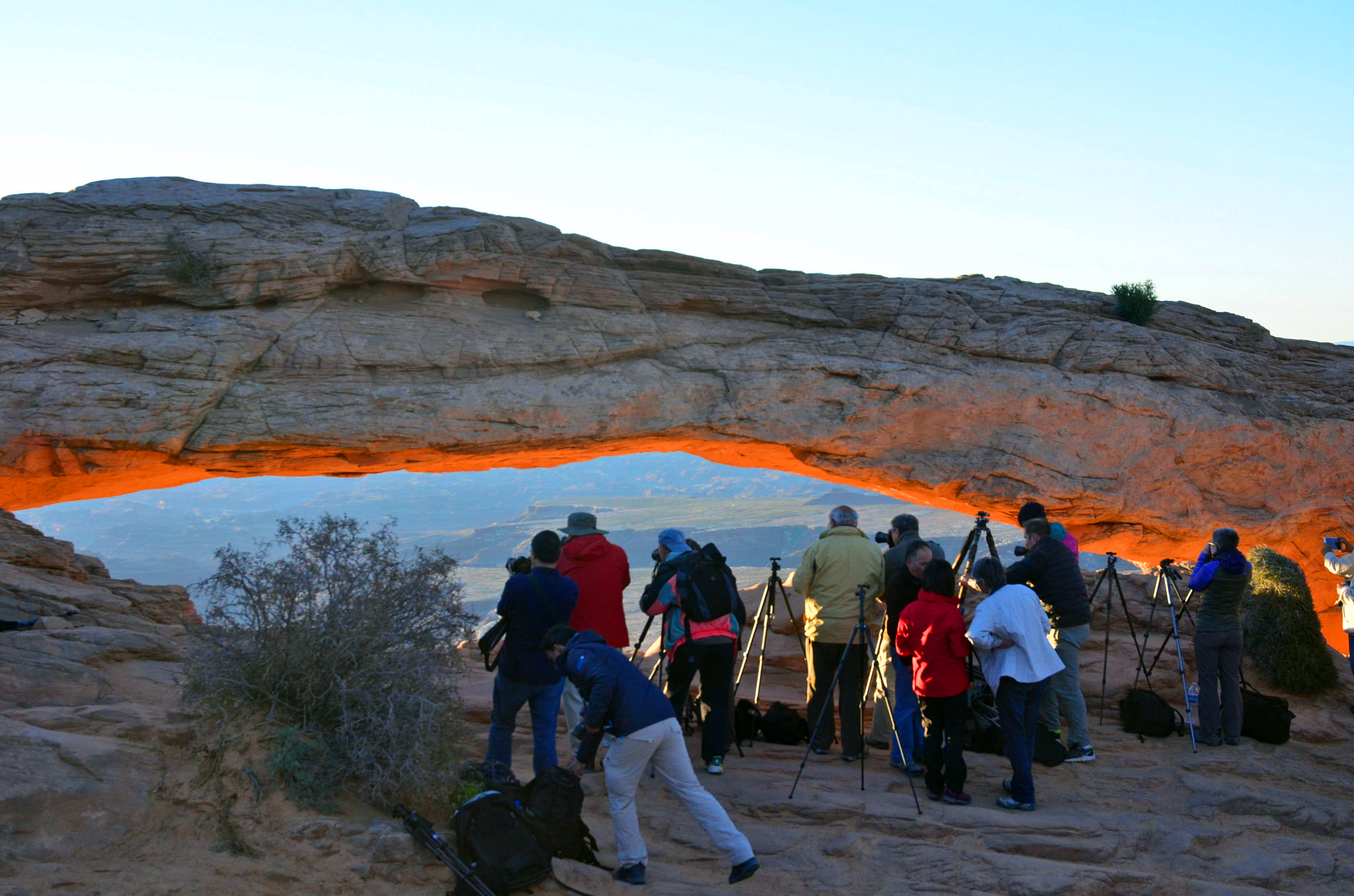
Mesa Arch is located about an hour from Moab, Utah in the Island in the Sky region of Canyonlands National Park. If you want to capture this image, you should arrive at least an hour before sunrise as you will probably be joined by many photographers. I left Moab at 4:00 am, arrived at the access trail at 5:00 am for a 6:15 am sunrise and there were already a dozen or so photographers lined up in front of the arch. I was lucky to get the last prime spot. The rising sun lights up the underside of the arch.
More images:


A beautiful canyon in NE Arizona:


…The larger culture itself has become morally empty….
David Brooks, NY Times June 7, 2016
New York Times Columnist Tom Friedman described the Republican Party as morally bankrupt.
Washington Post Columnist Richard Cohen wrote that Donald Trump is “without principles.”
People roundly condemned Speaker of the House Paul Ryan for putting his policy ambitions ahead of his values in supporting Trump despite Trump’s racist comments.
And on and on I could go about the lack of values and morality in Donald Trump and much of the Republican Party.
Some call for a moral revolution in America.
We don’t need new values, a new morality or a moral revolution.
We already have national and personal values worthy of our allegiance and commitment. Many of us simply lack the awareness and audacity to live true to our values. For many our courage has become lazy. Too many of us succumb to the worst elements in the workplace, the neighborhood, the statehouse and the congress. We gladly join with the mediocre to avoid conflict. We dumb our brains and our hearts down to fit in and give up part of our selves and lives when we do so. We stay silent and look the other way. I don’t know about you but, unlike Paul Ryan, I would say no to the team, the organization and the political party before I would sacrifice my values to be accepted by disgusting people, hollow presidential candidates or a political party on a path to irrelevance.
Had Republican primary voters been more mature, aware and value-driven and had they voted from wise discernment instead of their anger, Donald Trump wouldn’t be the Republican nominee for president of the United States. But they weren’t grownups and now the rest of us are called to be the adults in our political system.
If we are to solve the problems that engulf us, we won’t do it with the version of human being that created the problems. We need a new kind of ourselves: more awake and aware, more thoughtful, more value-driven and more loving and compassionate towards our planet, other people and ourselves. To consciously evolve ourselves takes courage. We become courageous one small brave act at a time.
Each of us can do what we can to live more true to our values in our day-to-day lives. We can stand up, speak up and put the moral implications of life front and center and do what we can to be the change in morality we want to see in others and in our leaders. In doing so, we do our part to bring forth a more mature version of ourselves.
The recent mass murders in Orlando, FL call us to do something about guns in our society. Our attitudes and behaviors towards mass violence is a form of insanity. Climate change, immigration, and income inequality continue to call for change each in their own ways. We must heed these calls to action or suffer the consequences of continued avoidance of serious issues that threaten our democracy and our way of life. We cannot stay as we are. Either we go backwards in our human evolution or we move to the future and a better people, nation and world. We are responsible. Our deepest values guide us.
Has our national character deteriorated so much, have so many abandoned their values so completely that Donald Trump, brought forth from the dark side of a small group of Americans, could actually be elected president? Will we turn our future and our nation over to this twisted and deluded man? Maybe, if masses of people stay indifferent. People need to vote on November 8, 2016.
America especially needs the young, the minorities and the immigrants—who so often don’t vote–to cast ballots for those who represent their values. You see, if we want change in this country (immigration, gun laws, income disparity, climate change and more) we can’t have 51% to 49% election results that only maintain gridlock. We need Democrats—from the top to the bottom of the ballot–to win a blow-out election that evolves our acceptance of diversity, which makes us a more alive and resilient nation, our partnership and cooperation with one another that allows every person to contribute to our success and our dependence on each other: we are all in this together.
Clear thinking and our value-driven actions must decide our destiny—not passive silence or by putting political agendas before honor.
A vote against Donald Trump who offers us “xenophobia, bigotry, misogyny and a crypto-fascist approach to government [Paul Waldman, Washington Post, June 13, 2016], may be the most moral thing each of us can do in the months ahead.
What would happen to our world if we said to each child: You are precious to us; you will always have our love and support; you are here to be who you are; try never to hurt another, but never stop trying to become yourself as fully as you can; when you fall and fail, you are still loved by us and welcomed to us, but you are also here to leave us, and to go onward toward your own destiny without having to worry about pleasing us.
James Hollis in Find Meaning in the Second Half of Life
From How To Raise An Adult by Julie Lythcott-Haims:
Catharine Jacobsen, a Seattle parent and senior college counselor at Lakeside School, got an important reality check when as a young mother she called her own mother to complain about being cold, wet, and muddy on the sideline at her kid’s soccer game. Catharine’s mother was not especially sympathetic. “I have no idea why you’re standing out there,” she said. “You aren’t showing your kids anything. If you want to show them that athletics are important, you should be going on a run yourself. Or if you want to show them what is valuable to you, go home and read a book, or get together with some of your own friends, or go to a play and then come home and talk about it. Why don’t you do some stuff of your own? That’s you getting a life. Your kids will observe that and think, ‘Okay, that’s how you get a life.’ And they’ll want to go get one. But the way it is, they’re going to get to be twenty-five and think, ‘I never saw grown-ups living a life. I only saw them doing stuff for me, driving around, standing somewhere on a Saturday morning.'”
It is hard to balance our needs for personal freedom and personal kindness with the needs of others—especially for parents with young children. But everyone in a family—child, parents and nowadays grandparents who are often deeply involved with the lives of their children and grandchildren–must carve out an authentic life of their own hopefully supported by all family members–or suffer the consequences of a soul denied.
I grew up in a parent-centered family where my mom and dad set the agenda for themselves and for the family. Along the engaged-detached continuum, they were less emotionally engaged and more detached from their children. That gave me and my brothers and sister lots of freedom to “get a life” of our own. When we couldn’t handle our freedom, dad who believed in “fair but firm,” handled us without drama or violence.
Mom and dad had lives of their own. They did things together and with their friends and unlike the child-centered families of today, the children were not included. I don’t recall ever feeling excluded as I happily went outside to play with friends. I had a life of my own.
I complained of my parent’s flaws as a young adult. My complaints were mostly self-serving. As I aged, matured and saw my own shortcomings, I better understood the context of their lives and forgave them their imperfections. What can we be but compassionate toward our parents when all lives are flawed—even our own? Now they are long gone, and I realize how good they were and I love them and respect them deeply.
As a parent, I tried to model the values my parents taught me—especially accountability and responsibility. I believed my job was to raise children who could leave our home and live a life of their own. If we do enough things right with children as they grow up, they will have the grit and wherewithal to set out on their own and find their own way in life.
Melanie and I have six kids between us. They live close to our hearts every day. We talk about them and the grandchildren all the time. We love to see them and wish we had more time with them and our grandchildren. We miss them but do not cling to them. We forgive them for the suffering they cause us and hope they forgive us our mistakes. We struggle with the delicate balance of how engaged and how detached we will be and where our children want us to be on that continuum.
We take care to not intrude in their lives (we sure want to sometimes) or to obligate them to be responsible for us in any way. We support them and often hold our breaths as we wait to see how things work out for them in the day-to-day ups and downs of their lives. We remain available to cry or cheer with them or provide a bed if they need it. But they remain responsible for their lives as we are for ours. Often we muddle along unsure of how to be parents and grandparents. We do our best and reflect and adapt as we go. Melanie and I have a full life together and each of us has a life all our own. We support each others journey in life and hope we are good role models for our children and grandchildren.
Our job was to raise our fledglings to leave the nest and fly on their own; our responsibility as parents of grown children is, I believe, to model for them a full life lived after the kids are gone.
And, as Catharine Jacobsen learned from her mother: It is always our job to “get a life.”





 Tom's Thoughts