A Note from a Reader of “Learning to Live: Essays on Life and Leadership”

What interesting lives people have:

I have just finished reading “Learning to Live:  Essays on Life and Leadership.”  I think it is an excellent book!  One of my nephews just graduated last Saturday from the Graduate School of Business at Dartmouth.  I have emailed him to see if he has read this book.  Otherwise, I will send him a copy.

In the late 1980s and 90s my husband and I took some consciousness raising workshops with Brugh Joy.  I don’t know if you have heard of him.  My husband also took EST and belongs to the Mankind Project where living an authentic life is paramount. I graduated from the University of Virginia in 1958.  (I was only allowed to attend at that time because my father was on the faculty  Women were only allowed if they were in nursing, education or if their father was on the faculty.  My father was the Dean of the Darden School of Business Administration and was invited to UVA in 1954 to set up that school).

As you probably know, UVA has a strict honor code.  If you choose to attend that school, you swear not to lie, steal or cheat–even at cards.  If you do, you can be banished from the University and from Charlottesville for life.  I don’t know if this is still the case.  I know my two years at UVA had a huge impact on my life.

I really liked your ideas of a value driven life and how great leaders engage their employees.  I wish all companies and businesses could be run this way.  I think this is naive on my part, but it seems that some companies have succeeded, so there is hope.   Your ideas about always changing one’s way of doing things and not becoming stagnant and engaging people in ongoing dialogue are great.  I could go on and on about all the great ideas in your book.

Margaret Eubank

Valerie Jarrett on Criticism

Valerie Jarrett to Wellesley College graduates on May 31, 2013:

I guarantee that everyone here who challenges the status quo will face criticism, disappointment and setbacks. Change is hard. Very hard. You will make mistakes, you will fail, and face rejection. In fact, if you never slip and fall, you’re being too cautious. Don’t let fear debilitate you. I used to be petrified of public speaking. I avoided it at all costs until I landed a big job opportunity where one of my principal responsibilities was… public speaking. Well, fear of failure motivated me to practice over and over and over. Slowly I began to realize that just because I was nervous did not mean I had to show it. And over time, what once took courage, I now enjoy.

And you don’t have to turn every one of life’s injustices into a “thing”. No matter how hard you may try, not everyone will like you, or what you have to say, or show you the respect that you have shown to one another while here at Wellesley. I remember this every time I look at my Twitter feed.

You will inevitably encounter people both professionally, and in your personal life, who try to shine at your expense, and undermine you whenever they can. They’ll deliberately try to hold you back, and break your spirit. Be patient, keep focused on doing your very best, shrug, laugh, and bounce back. Over the long haul, you’ll earn your colleagues’ respect, your bosses will recognize your talents, and your true friends will reveal themselves, and if any of them don’t respect you after you have given it a fair shot, go back to lesson number one: Be flexible, and move on. Prove ’em wrong. Success is the best revenge.

You will discover criticism is just a necessary price for success.

Amen.

via Valerie Jarrett: Be Flexible. Be Resilient..

First Review of “Learning to Live: Essays on Life and Leadership”

I am grateful for the first reader review on Amazon of my new e-book: Learning to Live: Essays on Life and Leadership:

Learning to Live is a work of art that every person daring to experience life should read. The author uses words that will bring you as close to humanity as possible. His way of sharing his journey through darkness into light is extraordinary. This is a testament to the fact that life can and should be practiced and lived. Whether you’re a seasoned leader or a start-up leader, this book is a reminder of how valuable each human being is. The end game isn’t in perfection but in living.

I highly recommend this book. Great read!

Thank you Dr. Karen Keller.

Art on the Lake

Melanie and I recently went to the Excelsior Art Fair.

Excelsior Art Fair 6.8.13ps

For those of you not familiar, Excelsior, Minnesota is a quaint lakefront town of about 2,400 people on the shores of Lake Minnetonka about 20 miles west of Minneapolis.

Parking can be a problem in Excelsior so we arrived about 60 minutes before the 10am opening.

We had time to eat so off it was to a great new restaurant in town:

Excelsior Art Fair 6.8.13 004ps

Mindful that I was a serious calorie counter,  I decided on a low-cal breakfast:

Excelsior Art Fair 6.8.13 006ps

THAT WAS GOOD!

I’m going to Lago Tacos again.

Fortified, we headed down the street to the art fair. The Port of Excelsior is a great place: lake, park, fishing, swimming, boat rides and enjoying a nice day:

Excelsior Art Fair 6.8.13 002ps

Hey! The Art Fair is behind you!

Excelsior Art Fair 6.8.13 010ps

I thought long and hard on our first stop:

Excelsior Art Fair 6.8.13 047ps

I really wanted that pig for the front yard but, in the end, I decided to wait for an Elvis statue.

Lots of butt shots at an art fair:

Excelsior Art Fair 6.8.13 020ps

Excelsior Art Fair 6.8.13 029ps

Excelsior Art Fair 6.8.13 075ps

My favorite places:

Excelsior Art Fair 6.8.13 056ps

Excelsior Art Fair 6.8.13 088ps

The big picture of the art fair:

Excelsior Art Fairps1

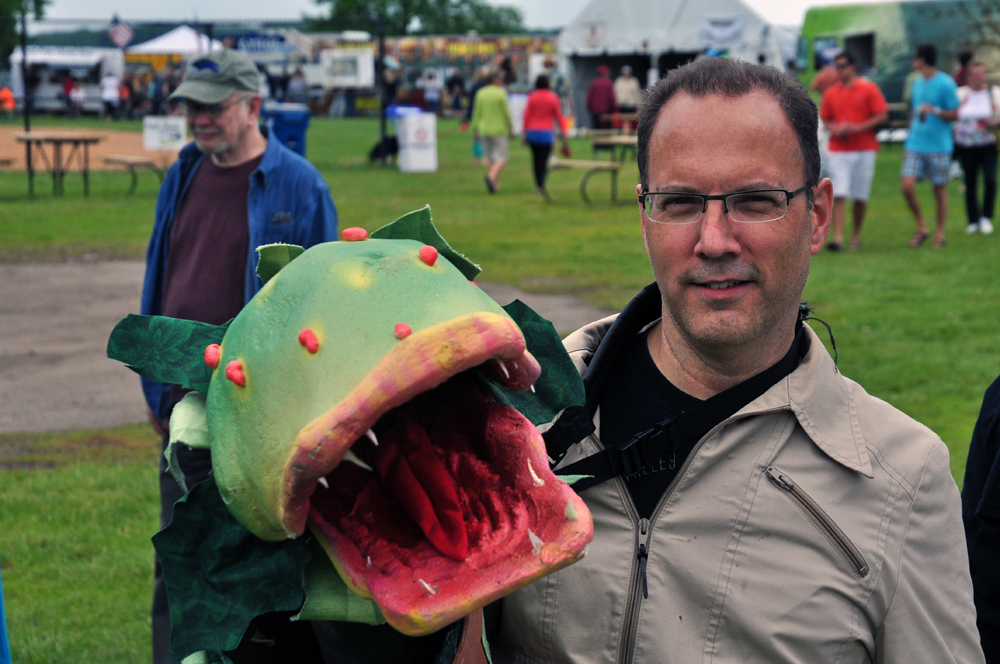
FEED ME!

Excelsior Art Fair 6.8.13 050ps

I’m all for moral:

Excelsior Art Fair 6.8.13 052ps

I used to work here. When I quit, the CEO said my leadership had changed the company forever. The next thing I knew, they went bankrupt. Nothing is forever.

Excelsior Art Fair 6.8.13 080

Well, we are getting tired. Should I go to the bathroom before we head home?

Excelsior Art Fair 6.8.13 079

NO WAY!

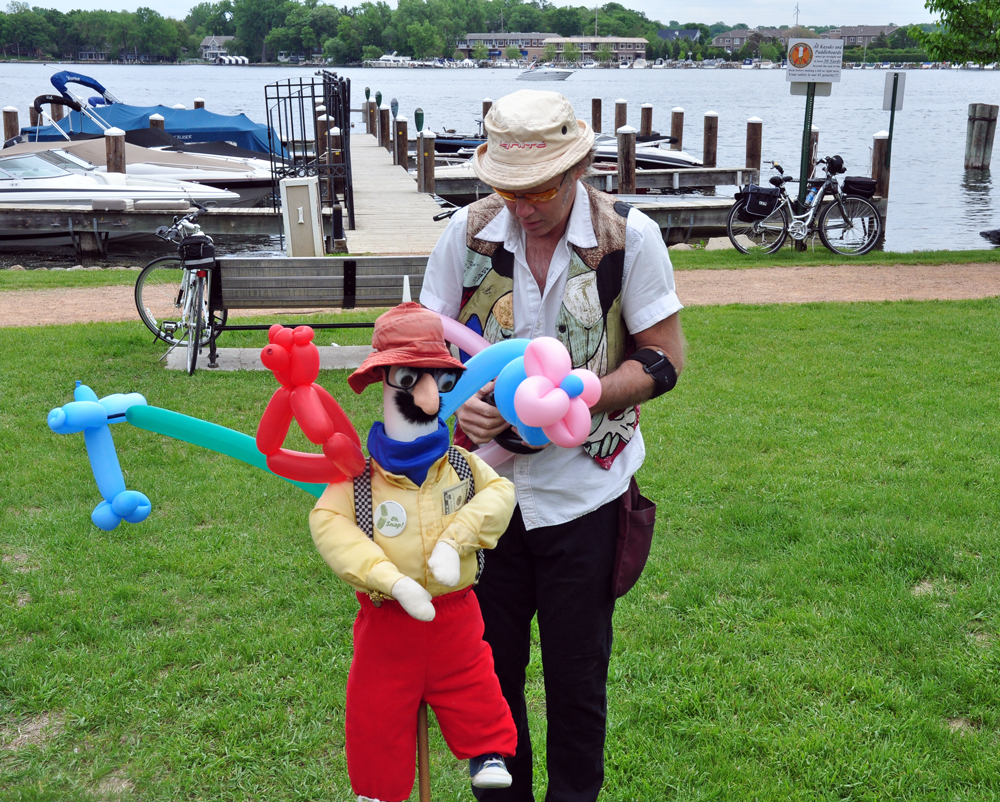
Balloon creation looks like the last boss I had.

Excelsior Art Fair 6.8.13balloonsps

We had a nice time. Next week it is the Stone Arch Bridge Art Festival.

See you there!

How We Spend Our Days Is How We Spend Our Lives

Ann Dillard in The Writing Life:

There is no shortage of good days. It is good lives that are hard to come by. A life of good days lived in the senses is not enough. The life of sensation is the life of greed; it requires more and more. The life of the spirit requires less and less; time is ample and its passage sweet. Who would call a day spent reading a good day? But a life spent reading — that is a good life. A day that closely resembles every other day of the past ten or twenty years does not suggest itself as a good one.

In the end, we become the choices we make. Otto Rank defined the artist as one who wants to leave behind a gift. Our gifts say “thank you” to life.

What gift will we leave behind when we leave this world?

Now Hiring: Stupid Employees Wanted

Two Swedish professors proposed in the Journal of Management Studies that companies with too many smart people risk having their workflow disrupted by workers who overanalyze everything and make repeated suggestions for alternatives. They conclude that the best team players are people who carry out their work without constantly questioning the processes or their bosses (Star Tribune, 6/2/13).

I don’t think so.

Frederick Taylor, an American engineer and the first organizational consultant, created “scientific management” in the early 20th century. Taylor’s principles led to detailed job descriptions for fragmented jobs. People created organizations with hierarchical, compartmentalized, and functionalized departments with rigid and impermeable boundaries. Managers “controlled” people with bribes and threats: performance appraisals; discipline procedures; incentive plans; and lies, abuse, and crazy making.

Conformity became the first rule of organizations. The only quality required of a worker was obedience. Leaders were separate from workers and creativity, initiative, and innovation came from the top or from outside the enterprise. Taylor’s message to workers was, “You are not supposed to think. There are other people paid for thinking around here.”

Taylor’s tragic mistake was to think that managers can control and engineer people like machinery. Treating people like pieces of equipment robs the workplace of spirit, ethics, purpose, values, emotion, and meaning.  I’m sure Taylor had no idea when he introduced the quest for efficiency without humanity just how many souls his approaches would crush, how much energy his methods would steal from creativity.

More than 100 years later, most organizations are mediocre monocultures that demand conformity. Everyone thinks and behaves the same. The discrepancy between the potential and actual life expectancy of corporations is greater than for any other species on the planet. Most people’s jobs are too small for them. Massive human potential goes unfulfilled. How’s scientific management working for us?

Smart people with great values fill our organizations. The problem with workplaces isn’t too many smart folks, and we don’t need more “dumb” workers: the problem is too many employees who comply with the demands for conformity and dumb themselves down to be accepted by disengaged colleagues and lousy leaders who fail to create conditions where every person can choose to be their best without fear of being ostracized, marginalized, or discarded like old appliances.

The best team players aren’t the sleepy, silent, and spiritless human robots of Frederick Taylor’s dismal workplace.  The best team players are alive, energized, and engaged. They’re hard to handle. The best leaders care about others and support and encourage authentic people at work.

The “stupid” people in this story are the two academics who have apparently never seen the walking dead that fill the kinds of organizations they endorse.

Making a Person

In his June 3, 2013  NY Times column, The Way to Produce a Person, David Brooks wrote:

But a human life is not just a means to produce outcomes, it is an end in itself. When we evaluate our friends, we don’t just measure the consequences of their lives. We measure who they intrinsically are. We don’t merely want to know if they have done good. We want to know if they are good.

That’s why when most people pick a vocation, they don’t only want one that will be externally useful. They want one that they will enjoy, and that will make them a better person. They want to find that place, as the novelist Frederick Buechner put it, “where your deep gladness and the world’s deep hunger meet.”

If you are smart, hard-working, careful and lucky you might even be able to find a job that is both productive and internally ennobling. Taking a job just to make money, on the other hand, is probably going to be corrosive, even if you use the money for charity rather than sports cars.

We live in a relentlessly commercial culture, so it’s natural that many people would organize their lives in utilitarian and consequentialist terms. But it’s possible to get carried away with this kind of thinking — to have logic but no wisdom, to become a specialist without spirit.

Making yourself is different than producing a product or an external outcome, requiring different logic and different means. I’d think you would be more likely to cultivate a deep soul if you put yourself in the middle of the things that engaged you most seriously.

My advice over the years to people young and old:  Find what makes you feel most alive and then figure out a way to make a living doing it.

Composing a life is serious work.

The Illusion of Control

Always on the lookout for rare corporate authenticity, I listened to the group from a Fargo, North Dakota manufacturing plant as they spoke at an ethics luncheon sponsored by The Center for Ethical Leadership at Concordia College in Moorhead, Minnesota. Pete, the quality guy, was high-energy and exuded enthusiasm — a true believer in the work he did.  Walt, the president of the company, was humble and soft-spoken.

They talked of their workplace  and new tools like self-managed work teams, open book management, and continuous learning, along with the various methods of the quality movement they excelled in. I was more interested in their depth, passion, idealism, and human connection than in the tools they used to organize and express themselves — as interesting as those programs were.

Walt invited me to visit the plant. I talked with him and other plant leaders for two energized hours. Someone expressed concern for the sustainability of their innovative work. I told them they could think of their work as a beautiful garden that they nurtured with loving care. And I told them how a guy in a pickup truck could destroy their garden in a moment. Successful change efforts get destroyed every day in the corporate world by mindless and sometimes malicious executives.

The dominant culture of the corporation eventually pushed Walt out. Committed to ethics, authenticity, and employee engagement, Walt took over a plant in the middle of America. The plant owner had visited the Fargo plant and wanted Walt to transform his plant. As the plant turnaround took off, the owner complained to Walt that things felt out of control; he felt out of control.

Things felt out of control?

I think the owner wanted a feel-good quick fix: easy, fast, and comfortable. He apparently didn’t understand that fear, anxiety, and feeling inadequate and out of control go with organizational transformation and that deep change can’t happen without inner turmoil. Dealing with fear, loss, anxiety, and the loss of control evolves us as people and from the changes in us our organizations change. Under stress, people often try to return to an earlier state of comfort─a sure step towards decline. If people understood that their discomfort would pass if they embraced it, they would grow to a new level of understanding─a sure step towards sustainability.

I knew many executives over the years who said they supported employee involvement until the day came when they felt they were not in control─a sign that change was happening. Then their dark sides took over, and they sabotaged the employees who did what the executives had told them to do.

Our cosmos is not a vast machine that we control. She is a living system: chaotic, complex, and ever creative.

The belief that we are in control is an illusion.

Walt, a wise and resilient man, now leads a plant in the Eastern part of the country.

Welcome to Tom’s Thoughts

Heather turned to me and asked, “Do you want to send it?”

Heather once worked in a large business unit I led at the Star Tribune newspaper in Minneapolis, Minnesota. We lost track of one another about 20 years ago. We reconnected by chance last summer. Heather is now a writer, editor, and a photographer. I hired her to edit two book manuscripts.  On May 28, 2013, we were sitting at my dining room table ready to upload  Learning to Live: Essays on Life and Leadership for publication as an e-book at Amazon.com. Heather not only edited the manuscript, she also designed the cover, wrote an introduction, and formatted the text. I call this a legacy book: it is a way for me to save and leave behind a time of my life filled with adventures and peak experiences.

For the past 20 years, I’ve used my life as my own learning laboratory filled with study, intensity, and constant reflective learning all necessary to compose a life of my own. My art was not only the book I was about to publish but the intentional living that the book expresses. Every life is one of creative potential and we should put as much passion into designing our lives as painters, sculptors, writers, and artisans famous and obscure do with their creations.

I asked my wife Melanie to come to the room. “We are ready,” I said nervously. “I want you to give the command.” Melanie clicked the computer mouse and the manuscript uploaded flawlessly. A few hours later my book was ready to meet the world.

Welcome to “Tom’s Thoughts.”

Twenty years ago after much work, I wrote a purpose statement for my life: To live a life of spiritual, emotional, and intellectual adventures and to share what I learn with others. I will use this blog to offer my thoughts about life and leadership.

I invite you to engage with me.