Time Alone in the Desert

Aloneness is a vital part of any spiritual path. Tom Brown Jr. in Grandfather


Casey (my American Eskimo) and I had two weeks alone in the Sonoran desert. I decided to make the time my personal spiritual retreat—a time for my soul: I got up at 6:00 am, walked in the desert for five miles, exercised under the rising sun as it warmed the air, meditated for 45 minutes twice a day, read three excellent books on consciousness, journaled, studied, ate healthy foods and took some peaceful photographs.

The books I read were: Life Reimagined: The Science, Art and Opportunities at Midlife by Barbara Bradley Hagerty, Ending the Pursuit of Happiness by Barry Magid and A New Earth: Awakening to Your Life’s Purpose by Eckhart Tolle. Each book added to my knowledge. The Tolle book was especially powerful to me. Many pages spoke to me and my life. I would read and study more of Tolle’s work.

In 2001 I lived on the side of a mountain near Ouray, Colorado for 14 months. I read, wrote essays on life and leadership, grieved some losses and pondered life in the natural hot springs. I consulted enough to pay my bills. I often spent weeks with little human contact. I came face to face with many demons. I felt lonely at times. But I knew the time alone would not last forever and sometimes I have to sacrifice something in order to experience something else. A powerful new vision—now real–evolved from that time alone.

My time in the desert was not all peaceful: I tossed and turned in my bed at night, often woke long before my 6:00 am wake up time and wrestled with ideas and insights from the books I read and my meditations. Once I jumped up: I had to write the ideas that came to me when reading Eckhart Tolle’s book A New Earth: Awakening to Your Life’s Purpose. I felt excited when his words provided context for issues I had been struggling to understand for a year or longer. This was a time of inner expansion.

I worked hard to be present. I am a novice at meditation. I began to meditate about 1 ½ years ago. First I sat for 20 minutes a day. Then 45 minutes. At the end of my retreat, I committed to 60 minutes a day. As I meditated, I focused on my breathing. I observed the feelings and thoughts that passed through me. I often asked: “What am I resisting?” I concentrated on my senses while I walked. I admired the blooming flowers—new ones each day—in the Sonoran Desert. I listened to the doves and the quail sing their morning songs. I watched the roadrunners scurry among the cacti. A couple of nights, I sat patiently waiting for the beautiful sun to set below the horizon.

Soon it was time to clean the house and pack our SUV. I was ready to head for home. Casey was ready to come with me wherever I went. My mind was filled with ideas for projects, books to read, blog posts to write and things to do back home. My purpose renewed, I felt alive after a dormant period (See my blog post: Purpose Renewed).

I transitioned with several days in Canyon de Chelly and Canyonlands National Park for some photography. I loved the intensity of my travels and early mornings out in the natural world and days filled with new places and new images. I like contemplation and I like action.

We live better and longer lives with healthy relationships. We do need people. We also need time alone where we can reconnect with ourselves and the natural world, ponder our interconnection with all of life and renew our spirits.


Purpose Renewed

Purpose in life is more important than education or wealth in determining long-term health and happiness.

Life Reimagined: The Science, Art and Opportunity of Midlife by Barbara Bradley Hagerty


My month in a tough alcohol treatment center (1974) was a painful, high anxiety and profound time of spiritual awakenings, moments of metanoia and akin to turning from the shadows to the sun in many Plato’s Caves. I left the hospital a scared, hopeful and humbled young man and began my life of often muddling conscious evolution. My purpose was to stay sober, live true to my values and care for my family.

I next thought of my purpose for my life about 16 years later.

In the early 1990’s, I had a leadership experience that awakened me to the vast dormant and untapped human potential in most organizations. I felt alive as we transformed a major business unit. Results were phenomenal. This experience was the second great expansion of awareness in my life. Treatment had saved my life and this leadership experience changed my life forever. As successes multiplied, so did the fear in others and resistance to us grew. I sensed our work would be destroyed by the dominant culture. I began preparations for my departure.

“I don’t want to leave because I am angry,” I said to Diane Olson, Ph.D. my consultant. “I want a new vision to go toward.” I spent two years working with Diane and consultant John Johnson to develop a new vision for my life, a purpose statement and my core values. The work was hard. I read, pondered and talked with John and Diane frequently.

My purpose:

I live my life as a series of emotional, spiritual and intellectual adventures and I share what I learn with others.

This purpose aligned with my new vision for my life: to complete a Ph.D., to begin to write and to consult with organizations.

I left the company in early 1994. I set out to use myself as my own learning laboratory—that was scary.

I had many emotional, spiritual and intellectual adventures over the next 20 years. I changed my life dramatically. I felt alive and had many peak experiences. I shared my experiences and insights as a writer, coach and consultant.

For the past decade, I’ve had three core strategies in my life:

  • To optimize my physical, emotional, spiritual and intellectual health,
  • To partner with Melanie to keep our love alive always and
  • To have meaning and creativity in my life

I am fit and healthy. Melanie and I have a wonderful life together. We feel grateful. But I was aware of an angst in me the last couple of years that I didn’t understand. My feeling of aliveness had dissipated. I felt my life contracting: Retirement had shrunk my involvement in the world and didn’t feel as meaningful as robust work had. People I cared about were dying more regularly. Children were grown and didn’t want or need my experience or guidance. I experienced foreshadowing of physical decline and, as I approached 70 years of age (the entry to old age), I was well aware of where the contraction ultimately led.

Last summer (2015), my older brother got sick and died quickly. This unexpected loss affected me deeply–more than I expected it might. I felt that part of my foundation had cracked. Other losses added to the pain I felt. I wanted to feel differently. I wanted to feel alive again. My third strategy needed renewal.

Trying to repeat the past was the wrong solution. To do nothing would mean I had stopped learning and would lead to the resentment and bitterness that some feel in retirement. I needed something new to learn that would engage my spirit and create positive energy that I could creatively give back to life. I stumbled along seeking what would bring meaning and aliveness back. I needed a new emotional, spiritual and intellectual adventure.

My friend Heather gave me a trial subscription to HeadSpace.com. I decided to try meditation. I began with 20 minutes a day. I had tried meditation over the preceding decades. Unable to sit still, I soon quit. Now I could sit and begin to slow my mind.

I read the book, Wherever You Go, There You Are: Mindfulness Meditation in Everyday Life by John Kabat-Zinn. The book inspired me to expand and deepen my meditation experience. I had a feeling that meditation and consciousness were what I sought to bring meaning and aliveness back in this part of my life. I began to meditate 60 minutes a day. I realized new things about my inner world. I understood that constant, unmanaged and compulsive thought may be as insane as alcoholism. I realized that I had lived much of my life in the past and the future, not in the present moment. I needed to ponder my identity and my attachments. Meditation is much more than I had thought it was. I had much to learn.

In A New Earth: Awakening to Your Life’s Purpose, Eckhart Tolle wrote that we each have an inner and an outer purpose. We share an inner purpose: to become awakened (a gradual shift in consciousness). This aligns with my purpose of living a life of inner adventures. Our outer purpose–unique to each of us–is how we live out our inner purpose in the world. Almost every page of this book spoke to me powerfully. I know the feeling from past transformative experiences: I had found a new adventure.  I enter the organic, mysterious and potential-filled world of contemplation and consciousness.

I am a novice again.

I feel alive in the uncertainty of the unknown.

This experience reminded me of something that I knew during my career: My happiness came from the pursuit of noble goals—goals I might never achieve. I felt alive striving for objectives that mattered to me. During those years, I never thought about happiness. I thought about what I would do the next day to move closer to the top of the mountain I was climbing at the time. I realized that in retirement I need that same sense of dedication as a part of my life. All of us do and we will live longer, happier and healthier lives if we have a vibrant sense of purpose.

Maddy

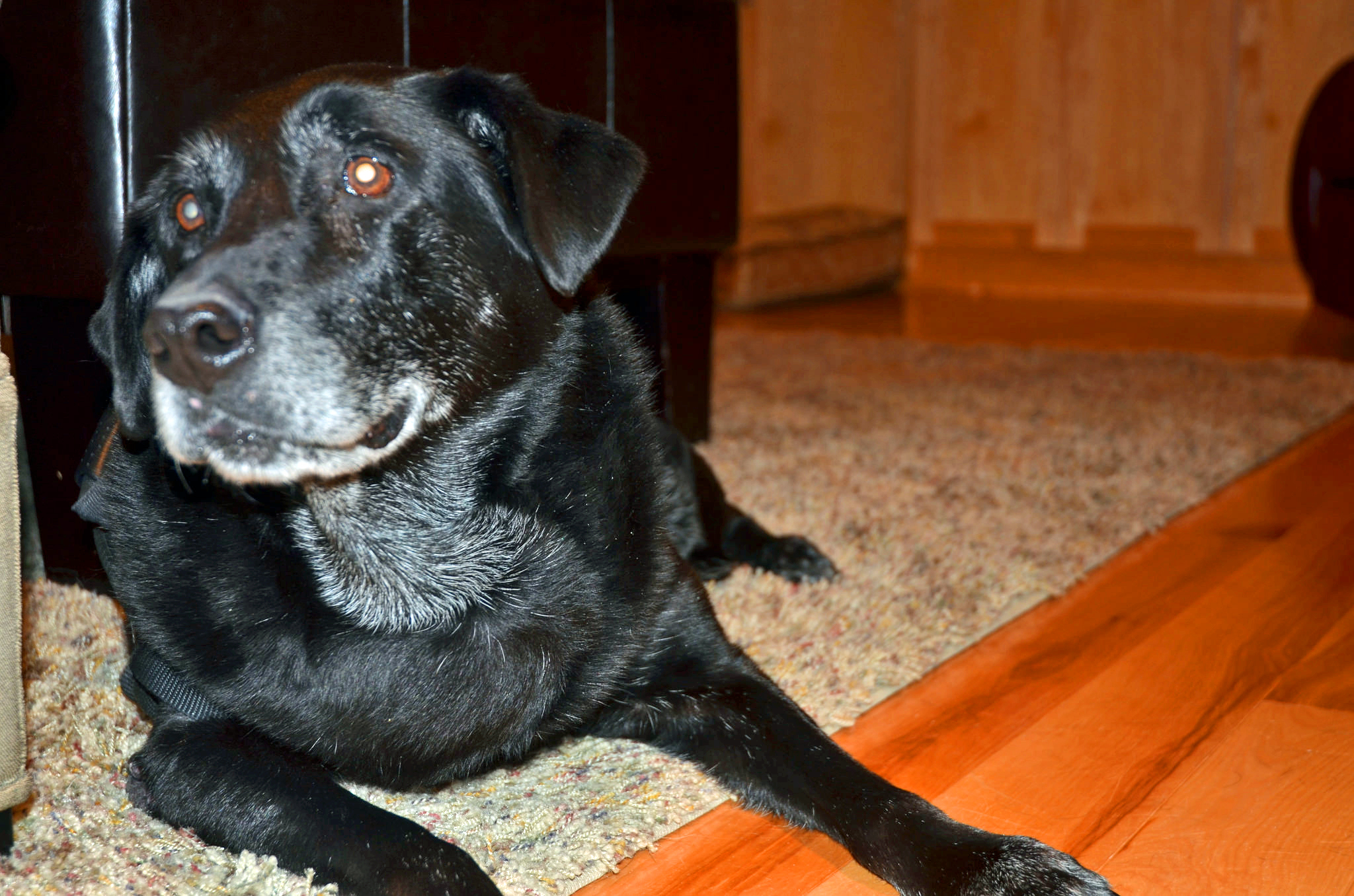
Madison was a great dog. Dr. Ken

We said goodbye to our beloved Maddy recently.

Maddy was Melanie’s dog before we married 13 years ago. I wasn’t particularly drawn to black labs. But I worked from home and spent much time with Maddy and Casey, our American Eskimo.

We walked five miles almost every day. Maddy loved to walk and run away if she could. We thought we had lost her a few times but after an hour or so she would come home with a big smile on her face.

We went to the lake in the summer. She loved to swim. We threw things for her to fetch and she would swim all day long if she could.

10682043854_d80c66bc99_o

Maddy was a lover. She connected with everyone she could get close to. She liked to burrow her head into and through you and would be so excited that it was hard to pet her. She never gave or received enough affection.

I came to love Maddy.

10681962975_57e7f09a9a_o

The years flew by. She was now more than 14 years old and had issues the last two years. Her back legs were bad and our walks went from five miles a day to a long block on a good day. It was painful to watch her lie down: so stiff and slow. It had to hurt, but she never showed it. Dr. Ken said, “She is a tough dog.”

Stiff and sore or not, she never hesitated to get up when Melanie or I were in the kitchen where she might get some food. She ate anything fit for human consumption and much that wasn’t.

The time came when she was unable to control her bowel movements. We coped with it for 18 months and frequent messes were hard on us. We tried to figure out her digestive system so we could predict when it was time to get outside but we never could. She became more and more unpredictable. It hurt us to restrict her to the mudroom near the end of her life. She didn’t like it.

Casey has lived with Maddy all of his 11 years. He began to show symptoms of anxiety. He didn’t seem to like it that Maddy had to be in the mudroom. When Casey ate, Maddy would stand behind the gate and stare at him. Casey began to move his kibble, one piece at a time, to a place out of Maddy’s sight, eat it and go back for more. He snuggled closer to Melanie and me and aggressively scratched the floors and rugs.

We hoped and prayed Maddy would pass in her sleep.

Finally we went to Dr. Ken. He told us it was time for us to act on Maddy’s behalf.

We took 11 days to try to prepare ourselves and to say goodbye. The kids spent time with Maddy. They took wonderful photos. Maddy loved their visits.

We cried—some openly, others privately.

22560309620_feb9afee92_k

The dreaded day came. We filled up with guilt and sorrow. Maddy got extra food and treats.

She was thrilled to go for a ride.

We arrived at the animal hospital and Melanie walked Maddy outside and let her smell the piles of leaves—always a big attraction. We went to an examination room. We gave her lots of dog biscuits while we waited for the doctor.

Maddy was happy to see Dr. Ken. He administered a sedative. Maddy never seemed to feel shots and she showed no sign that she felt the injection. She laid down as the drug took effect. Dr. Ken picked her up and put her on the examination table. When we were ready, he administered the shot. Maddy did not react.

And then she was gone.

We stayed with Maddy for a time and cried over her.

I hope this great dog knew how much we loved her.

Who’s the Enemy?

Deeply anxious and afraid Republican primary voters express their deep outrage with their political leaders: maybe hatred best describes their generalized feelings towards the “establishment.”

They wrongly seek leaders who will take them back to a black and white world—to quote NY Times Columnist Thomas Friedman, “To the certainties and prosperity of the Cold War or post-Cold War eras—by sacking the traditional elites who got us here and by building walls against change…” (NY Times October 21, 2015).

Rigid black and white world views shatter in times of chaos and uncertainty. Stressed people and groups tend to regress in their maturity and goodness—see the Benghazi Committee. Fear and anxiety will do that. The inflexible want “parents” to take care of them, heroes to rescue them from dangers real and imagined and magicians to do the impossible. Judgement suffers and the either/or folks fall prey to false prophets: those who prey on their hopes and fears to advance themselves. Why do they listen over and over again to those who lie and use them?

The angrier they get the more demanding and inflexible they become. Poor leadership is not divorced from themselves: Republican extremists co-created the state of the Republican Party. Their leaders reflect them: the people who put the leaders in place (see the Freedom Caucus in the House of Representatives).

How do the majority of us who are not today’s Republican extremists avoid falling victim to regression?

Robert Greenleaf, author of Servant Leadership wrote:

Who is the enemy? Who holds back faster movement to a better world? Who is responsible for the mediocre performance of so many of our institutions?” It’s not the evil, stupid, ignorant, or apathetic people. If the world is transformed there will still be evil, stupid, ignorant, and apathetic people. The enemy is indifference.

The Republican extremists are not indifferent. Fear driven and victims of a mechanistic world view, they are just wrong about so many things.

We cannot go back to an earlier time: life is complex, changes always and moves steadily into an unknown potential-filled future. Resistance to the need for change only causes more fear, pain and danger for all. We avoid regression when we step boldly into our unknown futures and adapt as we go.

Democrats are angry too: enraged with Republicans. Their anger should be redirected to getting people who support their causes out to vote.

Will the election of 2016 move America to a positive future? A renewed future for America and her citizens depends on the poor, the young, students, immigrants, minorities and the middle class: on those who want to heal our planet, educate our citizens, reform immigration, have a robust middle class, and evolve human rights for all people.

The tired migrants, the cynical students, the disillusioned minorities, the anxious middle-class and the desperate must awaken and vote for the future they want for themselves. So simple—go vote for your self-interest.

God will not save us. False prophets will fail to be great, heroic leaders cannot endure, parents cannot take care of us and the tricks of the magicians are illusions. We are responsible.

This is not a time for indifference.

Reflections at 70

I’ll be 70 years old soon. It feels like a big deal: scary as the awareness of time passing pushes into consciousness. I’m no longer in the second half of life: I’m in the last 20% of my life. My brother’s death this past summer—quick and unexpected–made the uncertainty of life palpable. For a while now I’ve reflected on my life from the edge of old age.

I’ve had successes and disappointments and many peak experiences. I’ve sought to live creatively and to feel alive. I’ve pondered my values and purpose in life often and have mostly lived true to them. When forced to choose, I’ve taken values and quality experiences over money. I’ve learned how to renew myself and my life intentionally. My biggest work success was leading organizational transformation and experiencing a grand awakening of my own.

Marrying Melanie was the best decision of my life. We live in sync with one another and I learn so much from her. We support one anther’s journey in life and sacrifice for each other. We learned long ago that love is a verb and we are active in our love for one another. I’ve had a few true friends and understand that family extends beyond blood.

My darkest time was a fall into the abyss of alcoholism as a young man—a place of despair where alcohol took my soul. My greatest personal triumph is my continued sobriety (managing a chronic illness) that now exceeds 41 years (knock on wood). I would say I am resilient, always move toward greater growth and learned long ago to stand alone when my values conflict with the crowd, which they did often in the corporate environment. I can also be cranky, impatient, obsessive and spend too much time fretting about stuff.

The older I get and the more I learn, the more I realize how little I know and how insignificant I and we are in the vast cosmos. I don’t know if God is real or if there is consciousness after death. I may find out when death arrives for me. The best preparation for whatever lies beyond death is to live a life of passion and creativity.

Sorrow accompanies me and grows as I age. Endings and losses increase. Tears come quicker. I’ve kept the awareness of death close since my 40’s. The consciousness of my mortality has helped me cut through the superfluous when I make difficult decisions. The awareness of death makes life more passionate. Now, as time grows shorter, my desire to experience life and feel the love that surrounds me grow even more intense.

Thinking about the past is often a bummer. Thinking about the distant future has diminished value. I find it best to live in the here and now (hard to do) and find the most meaning I can each day. More and more the natural world is my source of peace.

I feel grateful for being alive and for living in a nation where I am free to engage with my destiny.

The reflections will shift my inner landscape a bit but won’t change much externally. I am healthy and fit. I plan to live in the future as I’ve lived in the past. As my brother did, I will leap into the future and live fully. As my father did, I hope I will then die a noble and courageous death.

These are my intentions.

My Big Brother–A Good Person

My father lived with quiet dignity. Scott Heuerman

Life changed in a moment for my brother Allan and his wife Phyllis on April 19, 2015.

Driving home from the Baltimore-Washington International Airport after a three-week trip out West, the anticipation of almost being home ended for Allan and Phyllis when their car was rear ended, pushed across the interstate freeway and rolled on its side in the median. It took a rescue squad 45 minutes to cut them free from their totaled car.

After five hours in an ER, there was good news: Allan had a bad cut on his hand and two broken ribs. Phyllis had bruises and a headache. But there was also bad news for Allan: X-rays found enlarged lymph nodes and lesions in several places.

The weeks that followed were difficult: invasive tests that failed to locate the cancer, ambulance rides to emergency rooms for a fall that broke his ankle and another fall that required stitches in his forehead and on his face. Surgery to remove a lesion that had traveled to his brain from some unknown place elsewhere in his body. Then he contracted pneumonia.  I wanted to protect him from pain and fear but I couldn’t.

Phyllis needed help and I set out for Maryland. Not fond of airports or airplanes, I drove. I would be there in less than two days. I was about two hours from the hospital when he left us on July 2, 2015—unexpected until near the end. Phyllis and his children—Scott and Susan— were at his side. The cause of death was pneumonia brought about by cancer of an unknown origin.  We had talked on the phone the weeks before and I knew he loved me and he knew I loved him.

I felt angry at the unfair decline and loss of physical control that humiliated Allan. Allan was a good man: kind, caring and compassionate—a model for everyone who knew him. He deserved better from life and from death.

Why did this horrible sequence of events happen to him? No reason, just random biology. Nature is without values. Being a good person must be its own reward.

My daughter wrote to me from Minneapolis: “I am so sorry. Allan was one of the good guys.”

I thought about Allan often during his last weeks and in the days before his funeral. I thought of what a good guy he was: humble, gracious and soft-spoken. I remembered as a young child, Allan would make up scary stories and tell them to my younger sister and me in the upstairs back bedroom of my grandpa’s home and country store. He scared us and we felt excited. And we loved him for it.

I was about 9 or 10 and Allan was home from college. He gave me a dollar to go to the movie. The movie cost $.15 so I had $.85 to spend, which for a kid with a sweet tooth was easy to do. I got home and Allan said, “Where’s my change?”

Oops, the thought that he would want change back had not entered my mind. I said, “I dropped it in Lake George on the way home.” He let my preposterous fib pass and didn’t say another word.

As adults, we lived far from one another. Too much time went by without seeing one another and I regret that. As we got older, Allan and I went to Africa together on a photo safari and traveled and photographed together out West and in West Virginia.

As the years passed, we visited more on the phone and via email. We saw each other almost every year thanks to Allan and Phyllis who worked hard to keep the family relationships together.

At the end of the movie “Saving Private Ryan” an aged Ryan visited the grave of the soldier played by Tom Hanks, who had saved him. Ryan was an average man who worked, raised a family and lived an everyday life. He knelt at the grave and beseeched his wife: “Tell me I’m a good man. Tell me I’ve led a good life.”

Allan was smart and had great success in his career and community. He had a gentle heart—he was our mother’s son. He was the best of us. He lived an active life until he no longer could. He was, most of all, a good person, not always an easy thing to be in our world. He and his life mattered.

My reflections on my big brother and the life he lived deepened my awareness of his spiritual essence. I feel grateful for the dignity and decency he showed us.

Phyllis described her husband as an “extraordinary, ordinary man.”

That he was.

Old, Alone and Broke

I read a memoir of a man who was born in poverty and achieved unimagined wealth at a young age. He also burned out young and left the world of capitalism, competition and the constant drive for love via success: “If I am successful, people will love me.”

He hired a psychologist to help him understand himself, began to eat healthy foods and learned meditation from spiritual advisers around the world. After he figured life out for himself, he now lives out a great life.

I am often skeptical of those who take the spiritual road after getting rich (or to get rich) along with pride and arrogance in my journey’s more humble beginnings.  After a good start to my adult life, I crashed and my spiritual quest began in the depths of alcoholism and a month in a tough treatment center where I wondered if I would ever be able to create a good life.

Twenty years later, after a successful corporate career, I left the organizational world to go out on my own to use my life as a learning laboratory and to “live a life of emotional, spiritual and intellectual adventures and to share what I learned with others.” I also wanted to take part in a leadership movement I was sure would transform the way we lead, follow and work in organizations.

Along my journey, I made a stop on the side of a mountain near Ouray, Colorado where I lived, read, wrote, consulted and thought for a year. After I arrived on the mountain, I was flooded with anxiety and feared I would end up old, alone and broke (see my post, Did I Do the Right Thing?).

Old age approaches now—it scares me and I am glad to be alive. I’m not alone and I’m not broke. I have a wonderful life and my development continues with as much intensity at almost 70 as it was when I came out of the treatment center at 29. I’ve studied and made proactive and anticipatory changes in my life over the years and I’ve also learned from losses and mistakes along the way. I expect I will continue that learning for the rest of my life. I grow spiritually a bit at a time and become more human as I seek physical, spiritual, emotional and intellectual health (a lot harder than it sounds). I am still learning to live and haven’t figured much out other than how small I am in the cosmos and how little I know.

And my sometimes disdain towards those fellow travelers who get rich first and then turn spiritual says the most about me:

I have more work to do.

Isn’t it Obvious?

That life not be governed by fear. James Hollis in What Really Matters.

Everyone has fears. Some about the present; others about the future. Some of us live our lives by rigid black and white rules of right and wrong, either/or, and good and bad. That’s not how life is. I think those folks live frozen by fear of a gray and unpredictable world of change and complexity.

We can confront our fears and step into a time of renewal for ourselves and America. Or, we can deny our fears and push them into the dark shadows. There, frozen by fear, we resist change and greater maturity.

Some of our neighbors want to heal our planet. Others want to devour her in an addictive frenzy. Consuming our biomass is not sustainable.

Some of our neighbors want a robust middle class. Others want a few to get most of the America’s resources. Such inequality is not sustainable.

Some of our neighbors want to treat immigrants with dignity. Others want to build walls and put people in jail. A monoculture is not sustainable.

Some of our neighbors want to evolve rights for women, workers, animals and minorities. Others want to roll back justice for all but themselves. Such regression is unacceptable.

Some of our neighbors want to educate all children. Others don’t seem to care. Uneducated masses do not make for a sustainable democracy.

Some of our neighbors want government to help and protect citizens. Others want everyone to be out for themselves. Such separation is not sustainable. Life requires cooperative relationships.

Some of our neighbors want peace so we can renew America. Others want the distractions of perpetual war in far-away lands. Chronic war is not sustainable.

Some of our neighbors imagine a diverse, creative, cooperative and engaged citizenry. Others have a vision of a paternalistic and wealthy white oligarchy in control. With compliant masses, we regress to a more primitive time. Such an attack on Democracy is not acceptable.

Some of our neighbors live the promise of America’s future. Others model the dark side of America’s past. Allowing darkness to lead us is not sustainable.

Some of our neighbors are willing to change how they live to evolve life. Others are not. Without massive change by all, America will not sustain herself.

Which vision enlarges America; which makes America smaller?

Many of us suffer from a failure of nerve and a distorted perspective of how life works.

Fear should not control our nation and determine her future

Isn’t where we should go obvious?

Will We Live Large?

We are not here to fit in. We are here to be eccentric, different, perhaps strange. James Hollis in What Matters Most.

Feeling alive came natural as a kid—a time when we live a life of learning, adventure and imagination as we explore and master our worlds. We venture out bravely, don’t know the rules, adapt as we go, and have fun living out our fantasies of being courageous heroes and heroines who do good for others. Childhood may be our last time of authenticity for a long time—maybe forever.

Somewhere along the way conformity and compliance become the rules–about the time we go to school, I imagine. Peers, parents and teachers mold us to be clones of one another. From then on most of us sacrifice our courage and authenticity as we try to fit in to be accepted by others in order to “succeed.”

When we begin our young adult lives—perhaps smart but unwise, inexperienced and full of ourselves–we think ourselves free and in charge. But the pressures to conform continue, often below the surface of our awareness. The unwritten rules of corporations and institutions replace our parents as the paternalistic voices in our lives and demand obedience and submission as the price of a job. Their message is, “Don’t think, do what we tell you and don’t rock the boat.”

And we don’t.

Gradually we often suffer a loss of nerve and live small lives. We seek to please others and forget to please ourselves. We feel obligated to be responsible for others but are not responsible for ourselves. One by one we make decisions that diminish us. Choice by choice we lose ourselves and sleepwalk through life. We cannot answer the questions, “Why am I here? What do I want?”

Around the middle of our lives, something might cause us to wake up. We realize that our lives are half over and that we only have one life and it is running out of time fast. We give ourselves permission and ask some important questions: Who am I apart from my roles? What do I want for my life? What does life ask of me? Can I live a larger life? We ask, “Do my choices enlarge me or make me smaller?” James Hollis wrote, “…we all have to grow up, become wholly responsible for our lives, relinquish the search for the good parent in others and stop whining.”

When we take responsibility for our lives, we can, if we want, live the larger, more authentic lives that were always meant for us.

Will we?

A Good Person

I have come to the conclusion that whether or not a person is a religious believer does not matter much. Far more important is that they be good human beings. The Dali Lama

Timothy James Hollis in What Really Matters by James Hollis:

Ethic

I have always believed in a strong work ethic
but the definition of which is widely different:
I didn’t do well in school;
I have gone job to job,
but what I worked on most,
the only thing I care about,
is being the best human being I can be.

This is in conflict with number crunchers,
those who still believe in a ladder to success.
I failed miserably in all those respects
and have a genuine friend from each of those experiences.

The definitions put forth in this culture, and many others,
work well for those like minded:
for those of us who are centered elsewhere,
it often ends poorly.

I know the routines very well and have performed,
but when I see an antlered buck on the side of the road
or a rock that sparks fascination,
or a grocer who is especially kind,
I feel alive.

Of course we need bridge builders and planners
and those with heart-mind of creating community,
and I think I am not an aberration
but a necessary part.

I do not advocate anyone follow my path:
there is a place, though,
for the mystical, the artists, poets and the like
to stop, for a second, the serious minded
and say, “look.”

Psychologist Abraham Maslow wrote that to save our world we must create the “good person.” He defined the good person as:

The self-evolving person,

The fully human person,

The self-actualizing person….

To become a good person is the work of a life time.