Lifelong Learning

In the 2000’s, the American Dream faded for millions of Americans. As the 2016 presidential election approached, work rates were at their lowest levels in decades. Millions of people had dropped out of the work force and income insecurity grew. An opioid epidemic of pain pills and heroin spread across white America often funded by Medicaid and disability insurance, which had become long-term unemployment insurance for many. A study showed that nearly half of all working-age male labor-force dropouts—about 7 million men—took pain medication daily.

Sickness and early death in the white working class could be rooted in poor job prospects for less-educated young people as they first enter the labor market, a situation that compounds over time through family dysfunction, social isolation, addiction, obesity and other pathologies.” Suicide, chronic liver cirrhosis and drug overdoses account for much of the increase in death rates.

Many felt left behind in a world that moved faster than most of us could keep up with. Millions no longer trusted politicians, government or America’s institutions. People felt angry, afraid and anxious because America was not going in the right direction for them. Their lives were difficult and getting harder.

The time was perfect for Donald Trump. He promised he would “make America great again.” He would withdraw from globalization. He would bring manufacturing jobs home. And he would give great health care to everyone. He would build physical and psychological walls to keep Muslims and Hispanics out. He called them criminals and terrorists. I call them poor and powerless, mostly women and children, in search of a safe-haven.

Citizens didn’t have to be anxious about climate change: it was a Chinese hoax. Trump would get rid of the EPA, eliminate regulations, exploit our national parks and national monuments and double down on consuming finite resources. If facts and truth got in the way, we would use alternative facts: truth and reality would be what we wanted them to be. Fantasized wishes and opinions would replace science. Together we could create our own imaginary world and live happily ever after. Life would be great.

Working class Americans felt “heard” by Trump. Millions so wanted to believe in him. Their desire to believe clouded their judgement, emotion trumped reason and the unfit and needy con man who lies more than he tells the truth became president.

Today only a few months into his presidency, Trump’s lies cover up his picking the pockets of the American people. Trump betrays those who voted for him and he and Republicans in Congress will continue to cater to the wealthy–indifferent to the suffering of everyone else. His biggest lie was about “healthcare for everyone.” His plan takes healthcare from 23 million Americans and is more a transfer of wealth from everyday Americans to the richest two percent of us than a healthcare plan.

Millions need to deal with addiction.  Trump made combating the nation’s drug-overdose problem a focal point of his presidency. “We will stop the drugs from pouring into our country and poisoning our youth,” he said… “and we will expand treatment for those who have become so badly addicted .” Trumpcare will, in all probability, reduce funding for treatment for Opioid addiction when the nation needs it the most.

More lies will be exposed: Globalization isn’t going away; we must be engaged in the world. Manufacturing jobs will not return; coal miners won’t get their jobs back. Climate change is real and we better get honest about the dangers: wars, famines, mass migrations and economic collapse. Walls won’t protect us, alternative facts won’t make reality go away and opioids, heroin and alcohol won’t restore purpose and meaning to our lives—only values, purpose and meaningful work will do that. Trump’s “make America great again” is a road to decline.

We can think of working class Americans as canaries in the coal mine. The issues that drove them to Trump may one day be everyone’s issues, their stories may be our stories. No group or economic class will be immune from the greed, selfishness and the lust for power of the Trump’s of the world. They have no loyalties other than to their own ego’s. We have to say “NO” to “Trumpism” and the dark side of humanity that he symbolizes if we want to have any dreams in America.

We need to be aware of two highly probable future realities: Technology will continue to evolve rapidly and many great advancements will come from robotics, biogenics, nano-technology and artificial intelligence. But technology has a dark side that we need to manage: addiction, distraction, the loss of freedom and the loss of our humanity. And unemployment and income insecurity in the working class alert us to a future that will affect almost everyone. In the decades ahead, massive numbers of people will lose their jobs to technology: lawyers, doctors and accountants along with cab drivers and clerks. Some jobs will become obsolete; others will be done by robots, machines and workers in other nations. We need to adapt.

Thomas Friedman in his book Thanks for Being Late wrote that we must become lifelong learners: we must continually learn new things and develop new skills if we want to even begin to keep up with change and have a place in the future. To be employable from now on, we must reinvent ourselves throughout our lives–life is learning.

Lifelong learning might strike us as a small fix to complex challenges today and in the decades ahead. But the impact of valuing learning and weaving learning processes into the fabric of all aspects of life: you, me, our schools, our organizations, our communities and our local, state and national government and institutions would bring forth massive creativity, evolve our capabilities and prepare us for a future life more different than most of us can imagine today. Such change will require a well-balanced mix of government help and personal drive and responsibility. The alternative might be spending our productive years sitting in front of screens stoned on drugs and living on a small stipend or disability check (See: Homo Deus by Yuval Harari for more about the future of work and massive unemployment).

But we need to do more than just develop new job skills. We must also learn how to navigate difficult changes easier and faster. Friedman wrote, “Every society and every community must compound the rate at which it reimagines and reinvents its social technologies, because our physical technologies will not likely be slowing anytime soon.”

I used the work of William Bridges to manage external change and the internal emotional transitions that accompany external changes and must be guided if we want changes to be implemented well. A deeper understanding of change helps people make changes easier and faster and also helps people tolerate uncertainty and cope with chaos and complexity better. If you or your organization can change easier and faster, you will have a competitive advantage.

Daniel Quinn wrote in Ishmael: Perhaps the flaw in man is exactly this: that he doesn’t know how he ought to live. We need to do more than learn new job skills and learn how to change faster. We need to learn how to live differently. Our way of life and our existence as a species is threatened by our addictive consumption of the earth’s biomass. Earth is over-populated and we cannot sustain our way of life for much longer. Either we will change or we will not. Either way, something spectacular is going to happen soon.

We must see reality clearly and we must create new, positive stories for our collective future and unite around them. Then we can leave Trumpism behind and consider it a bad episode in America’s history.


Shots Around San Diego (2)

Click on images to enlarge.

Cabrillo National Monument

Ocean Beach

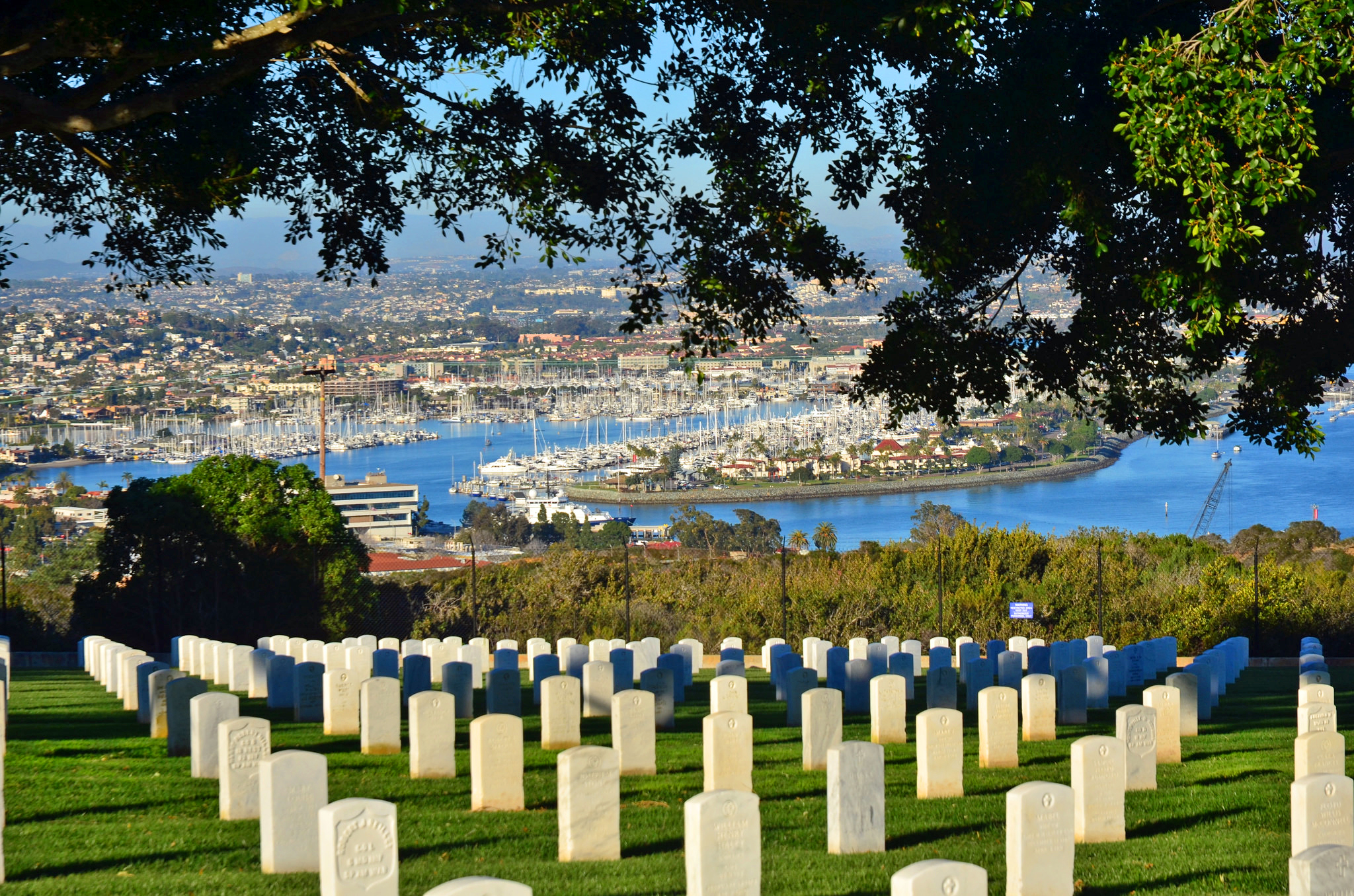
Rosecrans National Cemetery

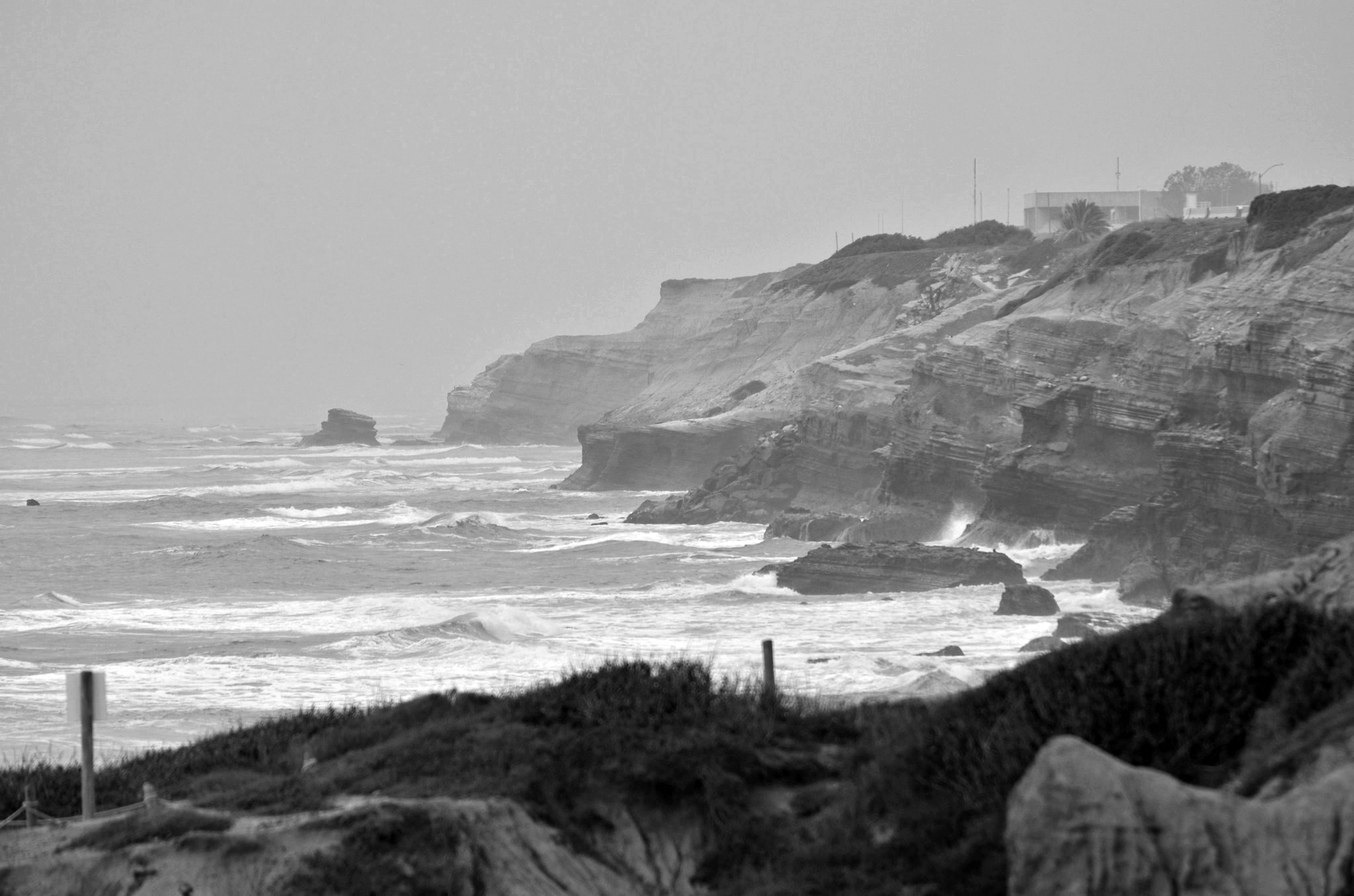
Sunset Cliffs

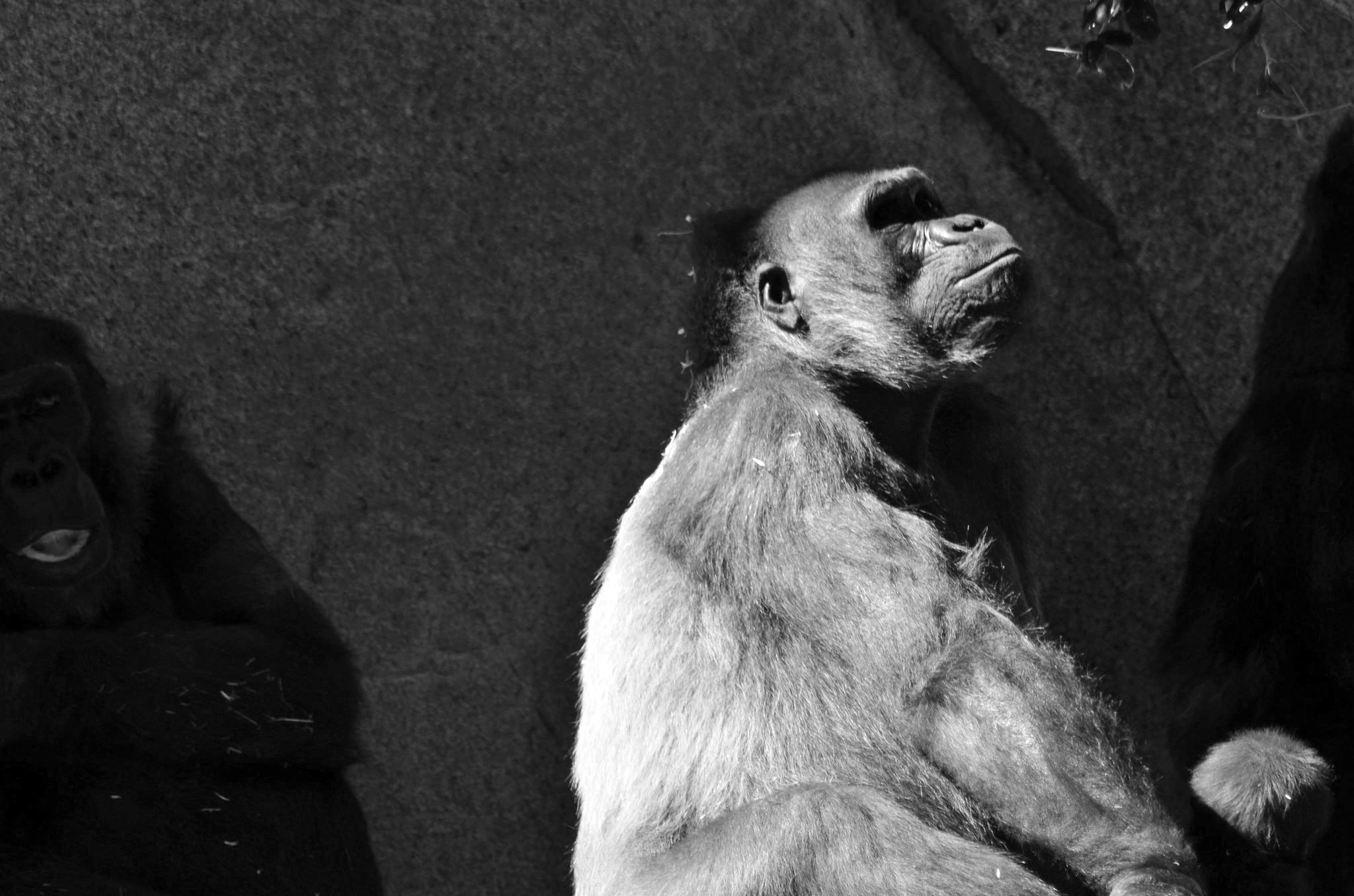
San Diego Zoo Safari Park, Escondido, CA

Bring Light to Dark Places

Every day repulsive Donald Trump shocks us with his malicious and bottomless dark side, his lack of a rational thought process and his lust for love, cruel behavior, overall incompetence and deceitful and self-delusional promotion of himself. Every word and deed services a limitless and unrestrained ego spewed on the world from the most powerful and esteemed office in the world. How did we end up with this vile reality TV charlatan as President?

Almost more painful to watch than Trump are the sycophants who fawn over and enable him: smart people who have sold their souls and don’t seem to care about the harm they inflict on the world if they get their reward whether it be money or celebrity or momentary power.

A prerequisite for being in relationship with Trump is a willingness to be diminished as a human being. Those who refuse to be made smaller quit or get expelled from Trump world. Perhaps a few brave souls choose to stay and suffer the indignity of Trump to help the nation. They too will reach their limit.

Worst of all may be the repugnant Paul Ryan and Mitch McConnell and those who follow them in our Congress who seem willing to sacrifice our democracy and hurt our people for tax cuts for the richest Americans who do not need the money–all at the expense of poor, working and middle class Americans.

The election of Trump was a national expression of poor judgement. I no longer believe that there is wisdom in the electorate. I fear for our democracy when fake news and alternative facts go mainstream and replace truth, reason and science for many people who don’t care or take the time to recognize and separate truth from fiction.  Did many voters choose distraction and entertainment over thinking and discernment?  I think so.

Spiritual writers tell us that a spiritual awakening is spreading across the planet. I believe they are right. But others have said the same thing for decades. I wonder if the movement grows fast and large enough to bring light to the darkness in time. Many people choose to live in the shadows of a fake reality and to be distracted and entertained instead of doing the hard work of seeing reality accurately. I have little hope for them.

This essay is for those who want to wake up and evolve as people.

My edited 2002 version of The Allegory of Plato’s Cave. I believe it fits today’s world in which many do not see reality accurately.

The allegory describes a scenario in which what people believe to be real is, in fact, an illusion.

Imagine a cave inhabited by prisoners who are chained and cannot move. They can only look at the wall directly in front of them. Behind the prisoners an enormous fire blazes continually, and between the fire and the prisoners is a raised walkway, along which people walk carrying things on their heads. Sounds made by the people on the walkway echo off the walls of the cave and make new noises. The prisoners cannot see the raised walkway or the people walking, but they watch and talk about the shadows cast on the wall by the people, not knowing they are shadows. The prisoners believe the shadows to be real and the sounds to be coming from the figures on the walkway, not just reflections of a different reality, since the shadows are all they had ever seen.

Imagine that a prisoner is freed and permitted to go outside of the cave and look around. The prisoner would be shocked to see that the shadows are only reflections of a more encompassing reality and that everything he thought he and his fellow prisoners knew about reality was wrong. If the prisoner returned to the cave, he would return as a changed person who could never again believe or act in the old way because the world was now a different place. The changed  person would want to act on his new understanding, could not bear to be confined in the cave any longer, and would pity his fellow prisoners. He would want to share his new wisdom with the other prisoners, but they would reject his new knowledge and would make fun of him because the reality they understood had not changed.

The cave prisoners know nothing but the shadowy reality of their limited world. They could not relate to a world they have never seen. The more aware prisoner would be seen as a threat to the established ways of seeing the world. The prisoners would not embrace the new world but would deny it, fear it, and cling more tightly to the old world.

Each of us has Plato’s Caves of our lives—places where ego, fear, greed, habits, wounds, denial, addiction, conformity, ignorance, manipulation, and even a cherished way of life blind us to greater insight, awareness, perspective, authenticity and possibilities. Caves are places where we mistake false appearances for reality. We can’t see what we are blind to.

But every once in a while, we get pushed, dragged—or even venture willingly—out of one of our caves. For example, the alcoholic on his deathbed is forced to make a choice of life or death. If he chooses to stay in his cave, he will die. If he chooses life, he must then see himself as he is—always the first step of change— not as his delusions and self-deception tell him he is. At first he is as mad as can be at this forced change. It is always painful to be confronted with our false realities. But he slowly becomes acclimated to a new reality. Increased self-awareness and new knowledge bring forth new ways to live with meaning and purpose. This transformation is often called a spiritual awakening.

Like drunks, everyday people have their caves too. Some never leave the caves of their lives and live what Thoreau called “lives of quiet desperation.” Others may leave a cave or two and then stop—content with their lives. Still others understand that our worlds have many caves in them. They know they’ll never run out of caves to abandon in search of greater aliveness. They are determined to seek out the caves of their lives and leave them proactively because caves always eventually confine or threaten their spirits.

Despite the loss and fear of change, these seekers choose intentionally to jump into new situations, new learning, and diverse adventures to expand their empathy, experience, and understanding. These people don’t stop leaving the caves of their lives until they die and no one knows what happens after death; perhaps the adventures continue. Whatever the circumstances, leaving a cave involves an inner shift that brings forth a deep examination and change of values, beliefs, and assumptions that evolve life.

The spiritual awakening of the alcoholic, the insights of everyday people, the enlightenment of the seeker, and the moment of metanoia — a change of the inner person–are similar, as each requires a temporary surrender of the ego, a re-ordering of the psyche, and a fundamental shift of perception.

No one who experiences this transformation will ever see the world in the same ways again. We should not be too proud of our initial inner expansion for we will be called over and over again to leave cave after cave, and journeys always humble the traveler. Of course we can choose at any time to refuse the summons of change and stay back.

Leaving a cave can be dangerous. Some cave-mates feel threatened when others change; they prefer the comfort of distraction and self-deception. They work hard to lure the courageous one back into the status-quo. The fearful might try to bribe or threaten the adventurer. They might lie or manipulate. They may say bad things. Those who dare to venture into the unknown are sure to become alienated from some long-time cave-mates.

We live in times of danger and difficulty. New threats loom over every horizon. Our planet is threatened and our way of life in peril–threatened from within. Fakes and charlatans with venal and regressive visions that return us to a more primitive condition clamor for our trust. We can look around and see how people under great stress—from our national leaders to everyday people in organizations, to the fringes of our political parties—become small, petty, and greedy and try to return to their old caves for safety. Some deny fact and truth. Others can feel strongly about every side of an issue depending on the audience. Some reject science for self-serving opinion. Many substitute intellectual honesty with black, white, and senseless beliefs grounded in fear and their inability to cope with the uncertainty and ambiguity of life. Their fear consumes them, and they live in darkness. In dangerous times, we need to be our best selves, not our worst.

We have only one healthy choice: to find the caves of our lives, to see reality clearly—even when it is painful—and to do what we can to become more wise, conscious, discerning and compassionate. There is no going backwards unless we want the dangers of our world to become realities.

Shots Around San Diego

Click to enlarge photos.

USS Midway

Windandsea Beach

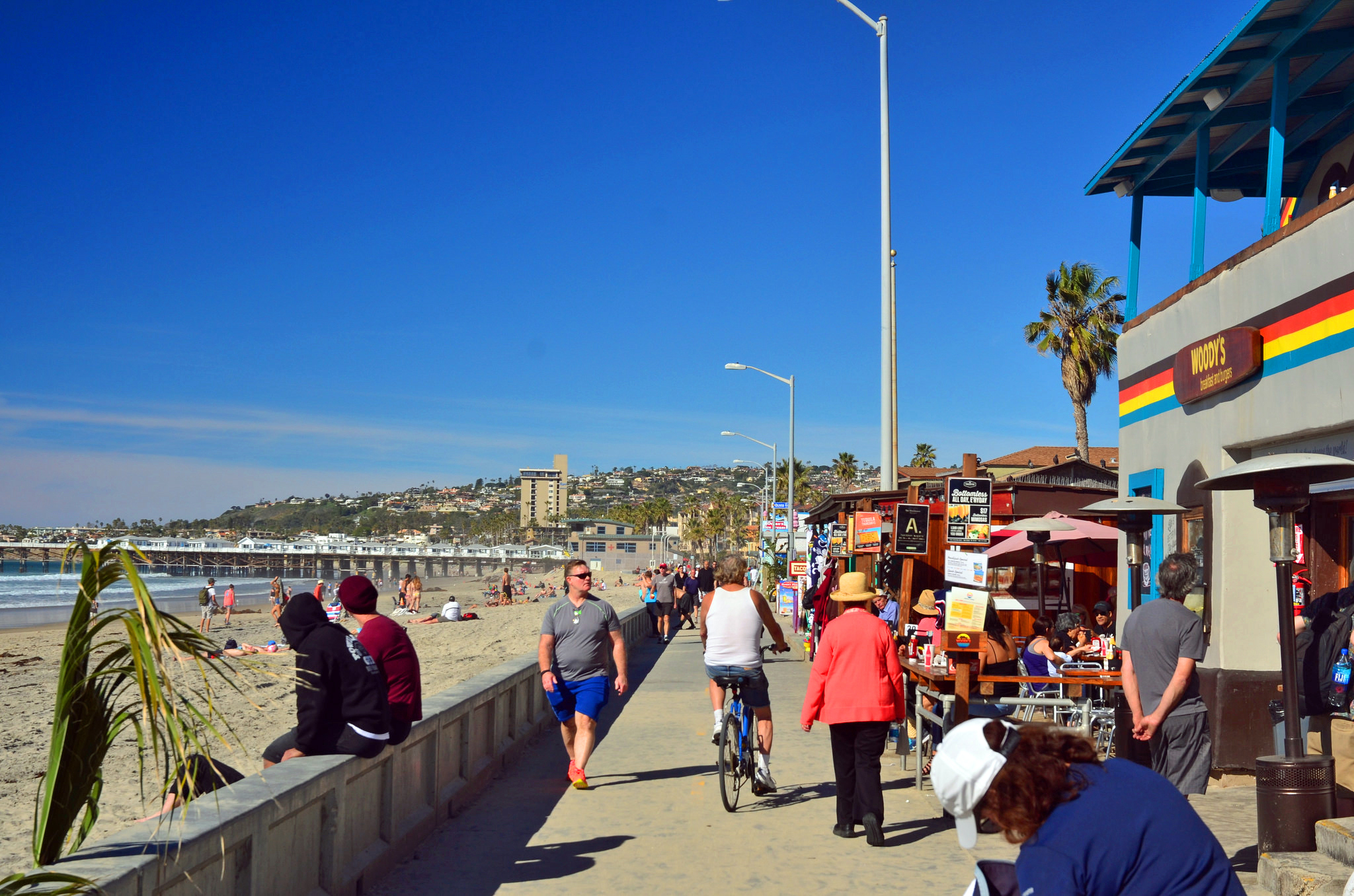
Pacific Beach

Scripps Pier

Shelter Island brown pelican

Super Bloom; Borrego Springs, CA

La Jolla, CA

Is It Time to Colonize Mars?

Homo sapiens is a serial killer of the ecosystem.

Yuval Harari author of Sapiens & Homo Deus


In Expedition New Earth—a documentary that debuts this summer as part of the BBC’s Tomorrow’s World science season—Stephen Hawkins claims that Mother Earth would appreciate it if we would find a new planet to call home.

And do so in the next 100 years.

Because of “climate change, overdue asteroid strikes, epidemics and population growth, our planet is increasingly precarious” wrote the BBC. Remaining on Earth longer than another 100 years places humanity at great risk of encountering another mass extinction, Hawking claims.

We must…continue to go into space for the future of humanity. Stephen Hawking

Another thought-leader said: “There are really two fundamental paths,” [Elon] Musk told an overflow crowd at the International Astronautical Congress in Guadalajara, Mexico. “One path is we stay on Earth forever, and there will be some eventual extinction event. … The alternative is to become a space-faring civilization and a multi-planet species.” (CBS News; 9/27/16) (Elon Musk is the founder of Space X)

Words from an essay I wrote in 2008 remain true today:

Republicans have made clean-energy legislation a dirty word.

New York Time columnist Thomas Friedman wrote, “We don’t have a ‘gasoline price problem.’ We have an addiction problem. We are addicted to dirty fossil fuels, and this addiction is driving a whole set of toxic trends that are harming our nation and world in many different ways. It is intensifying global warming, creating runaway global demand for oil and gas, weakening our currency by shifting huge amounts of dollars abroad to pay for oil imports…destroying plants and animals at record rates…..”

More fundamentally our problem is that six billion people (10 billion by 2050) are addicted to the consumption of our alive, interconnected, and interdependent planet.

That is not sustainable.

Lester Brown of the Worldwatch Institute, Washington D.C., wrote, “A sustainable society is one that satisfies its needs without diminishing the prospects of future generations.”

Sustainability is the moral issue of this generation.

We will change how we think, and we will figure out how to live sustainably on this planet or we will not. Either way, something spectacular is going to happen. If we change, we will renew our economy, restore American global leadership, and help save the planet. We will experience a new renaissance of ideas and an indefinite future. Nothing less will save our way of life and perhaps the young of today and the unborn of tomorrow.

People I believe (Al Gore, scientist Jim Hanson, philosopher Daniel Quinn, & explorer Will Steger) say we have 10 to 40 years to change. If we don’t change, the momentum that carries us to possible extinction will be too great to overcome.

We must understand that the disruption of global climate is not a linear process—predictable and measurable in discrete ways. Climate change is a nonlinear process—unpredictable and uncontrollable. Small changes will have large impacts—on storms, temperature, precipitation, humidity, soil moisture, atmospheric circulation patterns, snow and ice cover, and ocean currents.

Unintended systemic consequences may not be seen until it is too late. Impacts may well happen sooner and with greater destruction than even the worst predictions. Nature is amoral and species neutral; she doesn’t care about us–she just acts naturally. And such changes in our weather will set off equally nonlinear, unpredictable, and uncontrollable reactions that will affect all life forms on this planet—including the human population. A massive chaotic transformation of life may take place on this planet.

Without change, within 200 years we may perish as a species or a few islands of prosperity and privilege may survive surrounded by a sea of misery and violence. We need to move quickly and boldly.

We, like addicts of all types, are experts at denial; we pretend the worst will not happen. We are irresponsible. We expect magic, God, or some heroic leader to rescue us. We need a spiritual awakening–a moment of metanoia: a shift of mind. Scientist Rupert Sheldrake said, “It is like waking up from a dream. It brings with it a spirit of repentance, seeing in a new way, a change of heart. This conversion is intensified by the sense that the end of an age is at hand.”

God will not rescue us. Nor will a hero or heroine save us. We are responsible for our collective fate. The great threats of climate change, population growth, species extinction, resource depletion, and global poverty have called for change for a long time. Are we ready to listen and to change how we live together on this planet….?

Change will be difficult but ease or difficulty is not the issue. The question is: are we ready to change or not? If we are ready, we will get behind a new vision for the renewal first of the United States and then of the world and we will do what is necessary.

We put a man on the moon eight years after John Kennedy challenged the nation. We can be free of foreign oil and produce 100% of our electricity from renewable energy within 10 years.

Whatever we do, something spectacular is going to happen soon. We will experience an evolutionary bounce or an evolutionary crash.

Back to 2017:

Republicans are now leading America. Donald Trump is our president.

I just want to think about the future without being sad.

Elon Musk in conversation with TED’s Chris Anderson (4/17)

Trust the Process

Life is a process. We are a process. The universe is a process.

Anne Wilson Schaef

 Jack Kornfield in Path With Heart told the lesson in patience and unintended consequences from Zorba the Greek:

I remember one morning when I discovered a cocoon in the bark of a tree just as the butterfly was making a hole in its case and preparing to come out. I waited awhile but it was too long appearing and I was impatient. I bent over it and breathed on it to warm it. I warmed it quickly as I could and the miracle began to happen before my eyes, faster than life. The case opened, the butterfly started slowly crawling out, and I shall never forget my horror when I saw how its wings were folded back and crumpled; the wretched butterfly tried with its whole trembling body to unfold them. Bending over it, I tried to help it with my breath. In vain. It needed to be hatched out patiently and the unfolding of the wings needed to be a gradual process in the sun. Now it was too late. My breath had forced the butterfly to appear, all crumpled, before its time. It struggled desperately and, a few seconds later, died in the palm of my hand.

Zorba’s not alone in his impatience and lack of trust in the process of life to unfold naturally.

I went on a photo workshop in Yellowstone National Park with professional wildlife photographer Tom Murphy. Tom said he could always tell which photographers were from the city: They jumped out of their cars, took a quick picture and jumped back in their cars to get to the next location. He advised us to be patient and to watch and observe animal behavior and get some great photos in the process.

I’ve been an amateur nature and wildlife photographer for a long time. I’m always in a hurry to get the next location—to jam as much into the time I have. I wonder how many great shots I’ve missed because I couldn’t sit still to watch and wait for the behaviors of the wildlife I watched or for the light to be a bit better over the scene I wanted to photograph. Only in the past few years have I tried to tame those inner drives. I was the same in my work. My friend, consultant and Clinical Psychologist Diane Olson, Ph.D. said I had the intensity gene.

To become patient and to trust the process of life may be the biggest challenge I have.

I have so much I want to do, so much I want to learn. The speed of change in our world increases faster than I can keep up. Aging only intensifies my intensity to move fast before I run out of time. The madness of our world makes it hard to trust in the process of life.

I began to meditate a couple of years ago hoping to understand my mind better and calm my inner drives. Maybe I can uproot my impatience and accept that I am not in control. Meanwhile, I can be aware of my impatience and difficulty in “trusting the process” and make conscious choices to act counter to my inner drives.

I think many of us feel exhausted and overwhelmed due to our impatience and pace of life. In Uncommon Friends, author James Newton shared a letter he received from Anne Lindbergh who wrote about her pace of life:

I have not yet learned quite how to deal with those periods when one is learning and living too fast to digest. There was a wonderful story once told by Andre Gide of a trip he took through the jungle, very fast, with African guides. One morning the native guides sat around in a circle and refused to move. When Gide urged them on, saying he was in a hurry to get somewhere, they looked up at him seriously, reproachfully, but with complete rock-like firmness and said, “Don’t hurry us-we are waiting for our souls to catch up with us.

I want to do my small part to contribute to sanity and greater consciousness in the world. One way you and I can do that is to slow down and take time to be present without thought and separate time to think quietly.


San Diego Sunsets and a Sunrise

Click on images to enlarge.

Borrego Springs Sunrise

Coronado

Scripps Pier

Windansea

San Diego

Social Media: Excess and Addiction

How We Spend Our Days is How We Spend Our Lives–Annie Dillard

Melanie, granddaughter Saige and I were at the lake in northern Minnesota last July (2016) during the Republican National Convention. Obsessed with the presidential campaigns, I couldn’t bear to watch or listen to the Republican speakers. But I had FOMO: fear of missing out, I had to know what was going on. I turned to Twitter.

I followed my favorite pundits, experts, consultants and journalists. Tapping the Twitter icon was the first thing I did upon waking and the last thing I did before a fitful night’s sleep. I checked my phone constantly throughout the day. I’d go through new Tweets and see the notification that I had newer Tweets and I would begin scrolling all over again.

My body was at the tranquil lake with Melanie and Saige; my attention was fragmented and scattered all over the angry and anxious political landscape. I felt guilty about what I was doing and unhappy with what I was reading but I kept checking my phone apps: Twitter, Facebook and newspaper headline notifications. Every click of an icon brought me a new jolt of fear, energy or joy depending on the news of the moment. I knew my behavior was physically and emotionally unhealthy but I didn’t want to quit; I wanted more. My mix of fight/flight adrenaline and happy dopamine levels must have maxed out. When I felt depressed being away, I went to my phone for another fix. I was out of control.

Today, when Melanie and I spend time with Saige, they talk and laugh about their time at the lake–they have great memories. I remember the angst I felt and my crazy behavior that I did not like.

Tristan Harris, previously a Design Ethicist at Google, now leads Time Well Spent, a nonprofit movement to align technology with our humanity. He wrote that the average person checks her phone 150 times a day. I am not alone. Many addicts and potential addicts click away out there.

In a podcast interview with Sam Harris, Tristan Harris said app users should recognize that 1000 engineers work behind the screens empowering people to spend more time on the apps. Put more bluntly: Intentional or not, app designers, with no set of values to guide them, seek to maximize profits by manipulating users to spend more and more time on their apps. Some users become addicted with damage to their jobs, lives, health and relationships. Designers don’t try to help us make better life choices: they want our attention. We need to be aware of the dark side of technology so we can make smart choices for how we use our devices.

I quit Twitter on November 9, 2016. I stopped watching anxiety provoking cable news shows. I read newspapers for my news and quit going to their home pages many times a day for fear of missing something. I don’t look at my phone in bed or when with others. I recently decided to limit my time on Facebook to one short time period a day. I block out time for Internet surfing instead of going on and off it mindlessly many times throughout the day

Most important to me: I block out quiet morning hours to meditate and read books or listen to podcasts that challenge me and to write, which makes me think. These activities fulfill me and stretch my aging brain. I do not use any phone apps or visit the Internet before or during this period of time. I turned my phone notifications off so they won’t steal my attention and disrupt my focus and concentration. I believe that brains high-jacked by phone apps and constant interruptions are diminished brains.

To try to find meaning, purpose, self-esteem, and a sense of community from an addiction is futile and guaranteed to end in serious suffering. I know how hard it is to break an addiction: I quit smoking cold turkey 35 years ago and drinking in 1974. I consider myself a sugar addict. After a sugar binge, it takes three days of abstinence for the craving to subside. I resist app/Internet temptations daily. I replace them with healthy alternatives. I know from experience that the craving will pass. Excessive users may be able to break their habit on their own. Addicts whose behaviors interfere with work, school or relationships may need help.

I have a finite amount of attention to give and I don’t want to waste it. I want to give my attention to people I love and to activities that make me feel alive naturally. I don’t want my brain hijacked and dumbed-down or manipulated into addictions or excessive use of phone apps that drain my time, energy, attention and enrich others.

The Internet, iPhones and the apps available to us  are tools for us to use with thoughtful awareness to help us live more efficient, more productive and better lives. We need to be aware of the dark side of these tools and make our own choices about how to use them or the machines will make choices for us and absorb us. Now is the time to learn to use them in life-enhancing ways because future technologies will be more threatening to our humanity and freedom.

I look forward to being present at the lake with Melanie and Saige this summer.


Fort Rosecrans National Cemetery

Fort Rosecrans is a national military cemetery overlooking the San Diego Bay and the Pacific Ocean on Point Loma in San Diego.

I love to walk the cemetery and marvel at the views and feel the solemn and reverent spirit of this beautiful place.

Click on images to enlarge.

Where Did the Learning Go?

The recent United Airlines fiasco illuminated the dark and anti-human side of the machine model of organizations. United has much to learn about leadership.

The following excerpt comes from Learning to Lead, a book manuscript I wrote in 1995. The book described an organizational transformation in the Customer Service department of the Star Tribune newspaper in Minneapolis, MN from 1990-94. These thoughts remain relevant and I offer them freely to United Airlines.

During the fall of 1990, we established five strategic objectives.

They were:

  1. To improve the quality of work life for employees

Technology is important, but we felt that our employees had to come first. If they felt good about themselves, each other, their products, and their company, they would then provide enthusiastic service to the newspaper’s readers. Customer satisfaction and retention rates would then improve.

Quality of work life didn’t mean happiness. We knew we could not make everyone happy. Quality of work life meant creating a culture that treated everyone with respect, involved people in decisions that impacted them, empowered employees to serve the customer, gave employees the tools they needed to serve the readers, and provided opportunities to learn and perform.

  1. To improve customer satisfaction

It would be more important to retain our existing customers than to utilize promotional activities of marginal value to add new and usually temporary customers. We would retain customers by providing outstanding service, recovering rapidly when we made a mistake, and developing good relationships between front-line employees and our readers. These activities would grow our customer base.

  1. To become more creative

We realized that we would need the creativity of everyone as we moved to the future. We would change how we related to one another. We would encourage, draw out, and reward creative thinking and risk taking. To do this, we would have to change how we led. We would give up control, get out of the way, and allow people to be the best they could be. The job of leaders would be to facilitate this process

  1. To become faster moving and more flexible

We would do this through empowerment. Employees would have the freedom to serve their customers and make decisions about work processes they managed. The flow of information would be opened up and would support empowerment; secrecy would end. These changes in how we led people were required to encourage different ways of thinking about work and willingness to doing our jobs in different ways. The results would be speed and flexibility.

  1. To increase profitability

Financial success would be a natural result of realizing the first four objectives. Energized and committed employees would provide outstanding service to readers resulting in satisfied customers who would stay with the newspaper longer. Improved customer retention would mean reduced expense for generating new customers and less money spent on rework and recovery processes. A larger readership impacts advertising rates in a positive way. A creative, faster moving, and flexible workforce, empowered to provide outstanding service to customers, would require less supervision and fewer supervisors.

Creative employees would find new ways to bring revenue to the company. This business unit would eventually conceive of an alternate delivery system that would serve advertisers in targeted ways, initiate the marketing of products bearing the company logo to readers and non-readers, and investigate the use of our distribution system to deliver other products until told to stop by senior management (that wasn’t the business of a newspaper). There was a surge of wonderful ideas–most coming from front-line employees.

In addition to establishing these objectives, we wrote a vision for the business unit and a definition of Value Driven Leadership–those core values that would guide us as we moved toward our vision. Our key strategies were employee involvement, culture change, and market driven quality. We then created new norms for our emerging culture, developed specific planning objectives, and formed project teams. Values and vision drove our planning.

The redesign of our work and the involvement and empowerment of employees awakened those long dead to the organization and led to phenomenal business results and dramatic improvements in already outstanding customer service. Our work was recognized nationally, we spoke at conferences on employee engagement and people from around the country visited us. We had learned and shown that great human potential resides untapped in every group of people. Technology is really important; engaged people are even more vital. We do not have to choose humanity or technology. The right choice is humanity and technology.

I wondered why more leaders and organizations weren’t doing, in their own ways, what we were doing? While on the leading edge, our work was not the first effort to engage and involve employees nor was it unique in the specifics of what we did. Our story was a local one within a larger company, but the deep insights and underlying  dynamics we discovered exist at all levels of organization: The newspaper, the newspaper industry, across industries and across all communities of people and life itself. Why didn’t United Airlines, and thousands of other enterprises (and the newspaper industry) do similar things long ago with the knowledge available to them?

In 1994, I left the Star Tribune to join a movement to transform how we lead, follow and work in organizations and institutions. Under new leadership, the workplace we created was destroyed in short order.

I delved into the deeper dynamics that led to our success at the Star Tribune. I attended a Meg Wheatley dialogue where we discussed the new sciences that led to our success before we knew about the new scientific knowledge. Meg talked of the Fortune 500 clients she had worked with in recent years. When she returned to visit those organizations, she saw no evidence of change or learning. She asked, “Where did the learning go?”

I spent 13 years consulting in organizations and writing about organizational transformation and the kind of leadership required for such change. The movement I had joined had success stories but, unfortunately, I watched leadership in our organizations and institutions regress instead of evolve in life-affirming ways. Promising change efforts were  destroyed routinely; their leaders marginalized. I asked the equivalent of “Where did the learning go?” over and over again.

Today, more than 20 years after Meg Wheatley’s question, we have the United Airlines story within the larger societal context that contains powerful forces for regression and dehumanization. Many feel disheartened. I believe the crazy and dangerous resistance to facts, truth, learning and knowledge along with the marginalization and demonizing of the powerless are the final fearful and desperate efforts of a mechanistic world view that no longer solves our problems. I believe an ecological and living system world view will emerge.

As the rate of change accelerates in the future now upon us, I do not believe that leaders (or anyone else) who want a sustainable enterprise and a good and relevant life can continue to refuse to learn, ignore new knowledge and run from the hard work of human and leadership development. And I believe that new leaders and everyday people who love to learn and relish the hard work of personal growth will emerge from the rubble of places like United Airlines. I believe this because I trust that humanity will, in the end, choose renewal over decline. But then, I am an optimist.

On a global scale, a life affirming awakening flowers in the midst of a strain of madness. We must nurture this movement. If we pay attention, we can see great things happening locally and regionally every day. I hope our human awakening also becomes a great remembering of what humanity has learned through the ages. I hope our conscious evolution and greater enlightenment as a species happens fast so we have time to turn back anti-human forces and the great forgetting not only in our organizations but throughout our human community.

Whether a leader, a celebrity or an everyday person, we can ask, “Am I learning and reinventing myself over and over again so that I can feel alive, be fully human and create a good life for myself and my family?”