Evolved People or Real-Life Zombies?

In Our Machine Masters, New York Times columnist David Brooks imagined two futures for us in the age of artificial intelligence: a humanistic scenario in which, freed from mental drudgery, people focus on personal and moral faculties: being likable, industrious, trustworthy and affectionate. In the age of AI, “…we’re not human because we have big brains. We’re human because we have social skills, emotional capacities and moral intuitions.”

Or, in Brook’s utilitarian scenario, people become less idiosyncratic. The machines replace us as decision-makers. We conform and do what the machines tell us to do without question. Kevin Kelly wrote in Wired magazine: “As we invent more species of AI, we will be forced to surrender more of what is supposedly unique about humans. The greatest benefit of the arrival of artificial intelligence is that AIs will help define humanity. We need AIs to tell us who we are.”

Will we flourish in this new world of artificial intelligence or will we become real-life zombies? Or will we just muddle along?

In 2005, I wrote an essay on the Singularity: A superior humanity—artificially created. Genetics, robotics and nanotechnology fed by the exponentially increasing power and speed of information technology intertwine and multiply one another in symbiotic relationships.

As entities with greater than human intelligence are created, most intelligence of the planet will become nonbiological and changes in all other aspects of life will accelerate dramatically—including the more rapid creation of even more intelligent entities on a shorter time scale.

Will these technologies free us of the mundane, help us live longer and healthier lives, and extend our human capabilities? Will we solve all problems and become God? Scientist Ray Kurzweil: “We see exponentially greater love.”

Or will we turn into genetically programmed and soulless beings, our minds filled with information downloaded from computers, living out predetermined lives in service of the machines with no ability to control our own destinies and with those things that make us indefinably human altered, ruptured, or destroyed?

We cannot stop or control this development. If we push development underground it will only free the technology from ethical and moral considerations. The technology and its impact on our lives and the potential impact on the human soul will not be stopped.

For 300 years humanists have railed against the mechanistic world view and the unintended consequences of a philosophy that dehumanizes people. The critical challenge of our lifetime may well be to use explosive technical development to preserve and enhance our humanity rather than to have humanity neutered or destroyed by the mindless acceleration of technology without thought as to the unintended consequences.

Instead of being led by technology, we can lead technology. To do so we must accelerate our maturity as people and communities and bring forth a creative renaissance of relationships that will transform life on this planet. We must embrace the technology that threatens our humanity and outfox the creative dark side of human nature with the creative light of our humanity. The spiritual must transcend the technical; people must transcend machines.



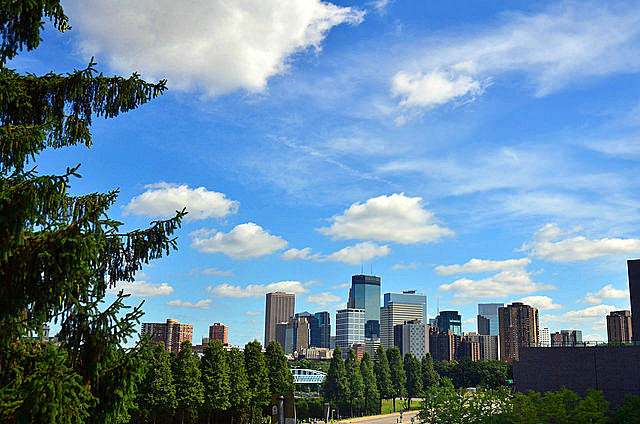
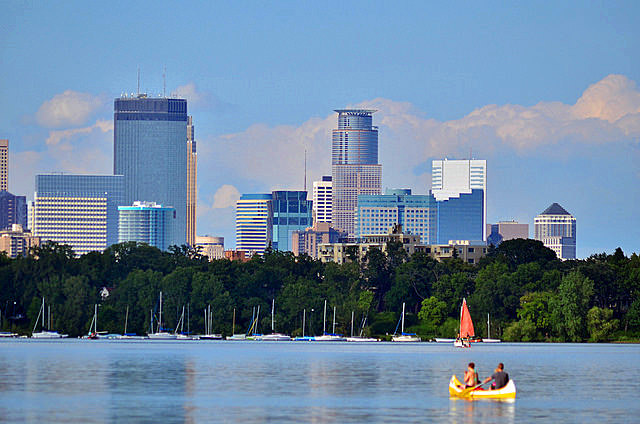
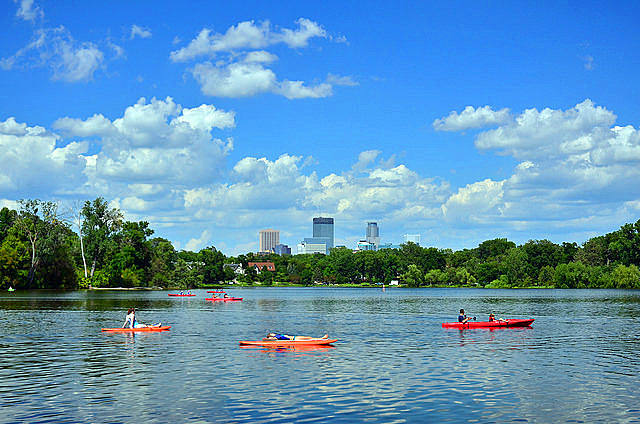
Minneapolis Skyline

(Click to Enlarge)

From the Stone Arch Bridge

From the Stone Arch Bridge

From Loring Park

From Loring Park

From Lake Calhoun

From Lake Calhoun

From Minneapolis Art Institute

From Minneapolis Institute of Arts

From Site of New Minnesota Vikings Stadium

From Site of New Minnesota Vikings Stadium

From University of Minnesota

From University of Minnesota

From Walker Art Center

From Walker Art Center

From University of Minnesota

From University of Minnesota

A Voice in the Wilderness

I’d consulted with a major Midwestern power company for a while, when a leader in the International Brotherhood of Electrical Workers (I.B.E.W.) said to me, “You are a voice in the wilderness.”

At the time, I didn’t think of myself as a voice in the wilderness or an advocate for some obscure theory. I focused my work—based on my real-life experiences–and attention on transformation and the leadership necessary to bring forth such difficult change in organizations. There was dire need for such renewal: few organizations achieved excellence and fewer yet could sustain distinction once realized.

I was fresh from my 18 year career at the Star Tribune newspaper where, in my last position, I had led a successful transformational change effort in a large business unit. When we began, I thought of how much I would be able to change the enterprise. But I was probably changed the most. My eyes were opened to the vast untapped human potential available to those who learned to think differently about leading groups of people. I left the company to complete a Ph.D. in leadership and organizational change and to share what I’d learned with leaders.

I tried to teach the leaders of the power company how to free their employee’s potential by inviting workers to get involved and to create conditions where each person could feel valued, involved, and informed—alien ideas in a mechanistic system. I wanted leaders to embrace tough love, lead from their values and humanize the huge enterprise. I believed the leaders would leap at the chance to improve the bottom line in dramatic fashion and reduce the time, energy and vast expense of constant conflict and litigation with the union represented employees.

I was mistaken.

The personal growth the leaders must make to lead such change felt too scary for them. I found the same in other organizations. Leaders wanted change; they didn’t want to do the hard work of change. My personal goal changed from “change the world” to “do what I can.”

I made each job an effort to plant the seeds of organizational enlightenment: those moments of metanoia that changed the inner person. Over 13 years I met a handful of leaders who understood and embraced the insights. But most could not summon or sustain the courage and commitment to undertake their own transformations and to confront angry and painful resistant to deep change.

After 13 years, tired and in need of renewal myself, I retired.

I never thought that calling on people to embrace the humanity of others would be a voice in the wilderness. The wily veteran of the I.B.E.W. was right.

We need many voices with moral courage to call out in the humanistic wastelands of our organizations and institutions.

More so today than ever before.

Summer in Minneapolis

(Click to enlarge)

Stone Arch Bridge

Stone Arch Bridge

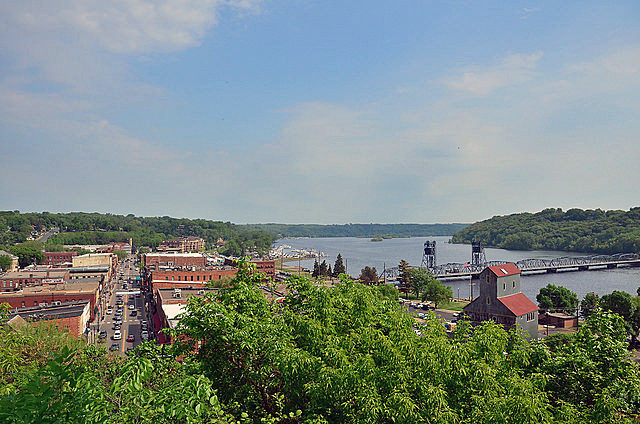
An art fair in nearby Stillwater.

An art fair in nearby Stillwater.

Music on the Stone Arch Bridge.

Music on the Stone Arch Bridge.

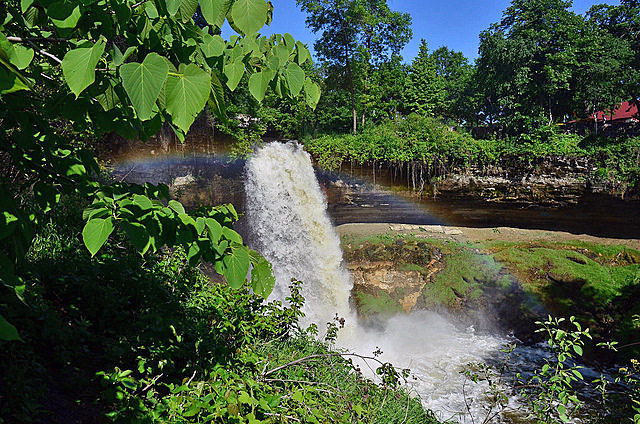
Minnehaha Falls

Minnehaha Falls

Minnesota Landscape Arboretum.

Minnesota Landscape Arboretum.

Loring Park

Loring Park

Lake of the Isles

Lake of the Isles

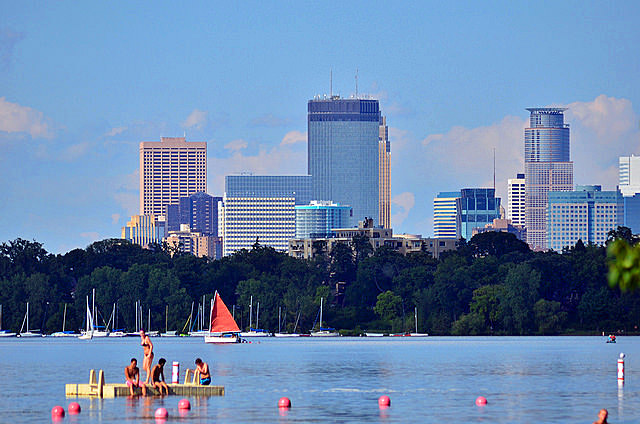
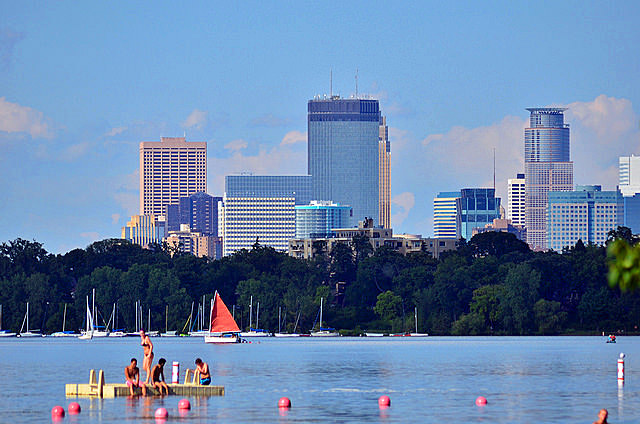
Minneapolis skyline from Thomas Beach on Lake Calhoun.

Minneapolis skyline from Thomas Beach on Lake Calhoun.

Minneapolis Skyline from Lake of the Isles.

Minneapolis Skyline from Lake of the Isles.

Sunday morning pancake in Loring Park.

Sunday morning pancake in Loring Park.

Swimming at Lake Calhoun.

Swimming at Lake Calhoun.

Gopher football at the end of summer.

Gopher football at the end of summer.

What Am I Feeling?

I sat in the circle of patients and family members on a dreaded family day in the alcohol treatment center. Spouses were there to tell the addict how their behavior had hurt, harmed, and humiliated the people they said they loved. The counselor’s attention turned my way, despite my efforts to hide in plain sight. “How are you feeling,” he asked. I didn’t know what I felt. I knew I felt something because I could feel the energy churning within me. But I could not identify or describe the feeling or separate the cluster of emotions.

Alexithymia is the inability of a person to identify and articulate feelings. Dr. Ronald F. Levant wrote in Masculinity Reconstructed “Men don’t realize it, but to live life incapable of feeling and expressing emotion is to live life in isolation—alienated not only from those they love but also from themselves.” The day I sat in that circle with other alcoholics and our loved ones, I felt alone and alienated from the people around me and estranged from my feelings and also from my values. Under my calm and stoic exterior, a volcano boiled. Men are taught to not feel most emotions. Our humanness should not be a defect.

The group worked on me, gently as I recall. They asked questions and I responded quietly. A nurse seated on my right began to cry. She reacted to something I said, and she told a story of how she felt when a child. I watched, like I was outside of myself, as my right hand reached out and covered her hand as she spoke. Her authenticity made me feel accepted and understood. I knew her in a moment–we connected.

I felt a surge of joy and optimism. I looked at the counselor and said, “Can I hug my wife?” The counselor said, “You can do whatever you want to do.” I got up, walked across the circle and hugged my wife. What happened was like an out-of-body experience–my first spontaneous action in a long time. I came alive. I reconnected with myself and with others; I would never again lose that capacity, and from that moment on intimacy would be as important to me as achievement was.

My treatment experiences, now more than 40 years ago, began my journey into the complex world of emotions. I set out to learn how to manage my emotional world well. I make no claims to have yet reached that goal.

I read that baby boys are born more expressive than baby girls but mothers, fathers, and peer groups along with the unwritten rules of the larger culture soon begin to teach boys to repress emotions–especially “softer” feelings–to deny pain, and to cover their emotions with toughness and a stoic demeanor. Not experiencing their emotions robs men of their aliveness and traps them in a mechanistic set of habits, assumptions, and false beliefs about masculinity.

My primary goal in life is to feel alive. To feel alive, I need to feel the wide range of emotions that life offers—the sad feeling that brings tears, the tender and caring ones that show vulnerability, the angry and scared feelings that motivate us, and the high energy emotions of excitement and enthusiasm and all feelings in-between.

If men want to feel alive, we first must learn to feel.

California & Baja of California

(Click to Enlarge)

Near Mammoth, CA

Near Mammoth, CA

Near Monterey, CA

Near Monterey, CA

 Great Gray Whale Baja of California

Great Gray Whale
Baja of California

"Kiss the Whale" Baja, CA

“Kiss the Whale”
Baja, CA

Great Gray Whale Our boat in background Baja, CA

Great Gray Whale
Our boat in background
Baja, CA

Near Mammoth, CA

Near Mammoth, CA

Lone Cypress Tree Monterey, CA

Lone Cypress Tree
Monterey, CA

I Feel Scared and Inadequate

I was in the midst of leading a transformational change effort at the Star Tribune newspaper. I looked down the hall from my office door and saw a company consultant. I had met with him a few times to keep him abreast of our company-leading work with employee engagement.

I called out to him with a stern voice. He came toward me with a concerned look on his face. I said, “I have a bone to pick with you. You never told me at the beginning of this change effort that I would feel scared and inadequate so much of the time.” He laughed and said, “At least you are aware of it and are learning.”

That exchange took place more than 20 years ago, and I still feel scared and inadequate often. Actually, I often choose to feel scared and inadequate.  I chose to be a continuous learner and left the corporate world to use myself as my own learning laboratory and to reinvent and renew my life often, which I have done for the past 20 years.

Feeling scared and inadequate often goes with the territory of a life journey unique to each person. We imagine the path we will take, make our own rules and determine our own travel plan. We set out and learn that we must plan, act, reflect, and adapt often. We come to understand our journey is an organic process: messy, inefficient, and filled with unexpected twists and turns. We encounter surprise challenges and meet mentors along the way. We have no guarantees of where our journey will take us. We need to be brave on the odyssey that never ends.

I made major changes in all aspects of my life in the years after I went out on my own. I realized that my feelings of fear, anxiety, and inadequacy were shallow reactions to immediate realities and concerns and that at a deeper and more fundamental level I felt the confidence born of living true to my values, purpose, and vision for my life. Somehow I knew I would be okay and I always was. I’ve grown more comfortable being uncomfortable. Feeling uncomfortable is required to live a good life.

Today, I am at a different stage of life: I am learning to live well in new circumstances and I have goals and things to adapt to. But I am experienced. I will learn, adapt, and stay true to myself as best I can and trust everything will be just fine.

The Dearth of Competency

The everyday headlines about the lack of competence in our schools, churches, government, and organizations and institutions shake our confidence and belief that anyone can get things done right. Our personal and national zest for greatness appears exhausted and almost everywhere we look we see decline threaten our democracy and way of life.

Incompetence surrounds us. I fought for excellence and against incompetence at all levels throughout my 18 year career at the Star Tribune newspaper. Organizations were designed to keep good people down and the design works well. But excellence can be achieved even in such an enterprise, exhausting as it is.

I left the newspaper industry in 1994 to join a movement to transform how we work and lead in organizations. For 13 years I continued my battle against mediocrity. I met many wonderful people. But few excellent leaders or supervisors. Disengaged employees intimidated good employees and made excellence a crime punishable by threats, ridicule, and rejection. Today, twenty years after I joined the transformation movement, leadership and management and workplace cultures are more primitive than ever. Our organizations and institutions are too large and responsibility diffuse. Few hold others accountable.

But not all we label incompetence is incompetence. We sometimes expect too much of people, especially when they are learning new skills and information and doing new things or implementing new projects. We want our fixes to be fast, easy, cheap, and painless. That is magical thinking and not possible.

Change and new projects have learning curves and their implementations are often messy, inefficient, and people make mistakes. In new environments people must plan, act, reflect, and adapt constantly. Sometimes we need to remember that the chaos we experience is normal and the chaos of newness comes to order and it does so quickly. We need the wisdom to know the difference between genuine incompetence and the mistakes of change and newness and cut people some slack and give them time to get things right in new and difficult circumstances.

We like to blame others for our incompetence: worker incompetence is the fault of leaders; incompetent students are the fault of teachers. The problems of government agencies are the fault of President Obama. But the continuum from incompetent to excellence is a personal choice not the fault of someone else. I am responsible for my mediocrity or excellence.

Excellence isn’t just about work. Each of us—whatever our age, talents, and place in life–can choose where we want to be on the continuum from incompetence to excellence and in what areas of our lives—physical, emotional, intellectual, occupational, or character, creativity, or relationship excellence, for example.

Those who strive for their unique excellence in life work hard. They do not look for magic, quick-fixes, rescues by heroes, or something for nothing. They take responsibility for themselves, exhibit tenacity and moral courage, follow their own paths, and create their own lives. They understand that happiness comes from the pursuit of noble goals. And they renew themselves and find new sources of energy and spirit many times over the course of a lifetime. We should honor people for the excellence they display, not for their job title. I respect an excellent plumber more than an incompetent publisher.

Those who choose continual growth, learning, and self-discovery in pursuit of the person they could be rise above the mediocrity that surrounds them despite the difficulty.

Images of South Dakota

(Click to enlarge)

Fawn at Custer State Park

Fawn at Custer State Park

On the Prairie

On the Prairie

On the prairie

On the prairie

Bison

Bison

Badlands

Badlands

On the Prairie

On the Prairie

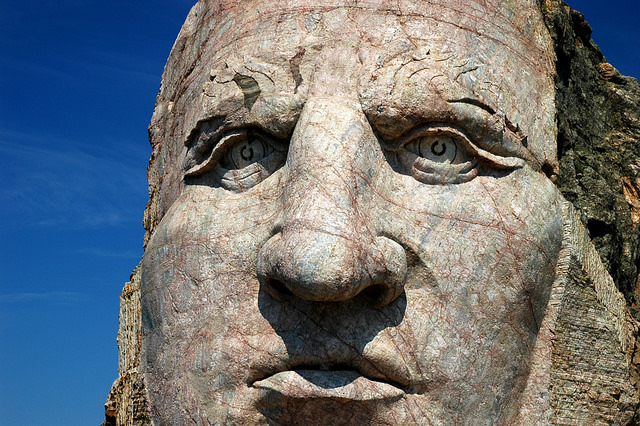
Crazy Horse Memorial

Crazy Horse Memorial

Crazy Horse Monument

Crazy Horse Monument

Prairie Dog town

Prairie Dog town

Mount Rushmore mountain goats

Mount Rushmore mountain goats

Dawn in the Badlands

Dawn in the Badlands